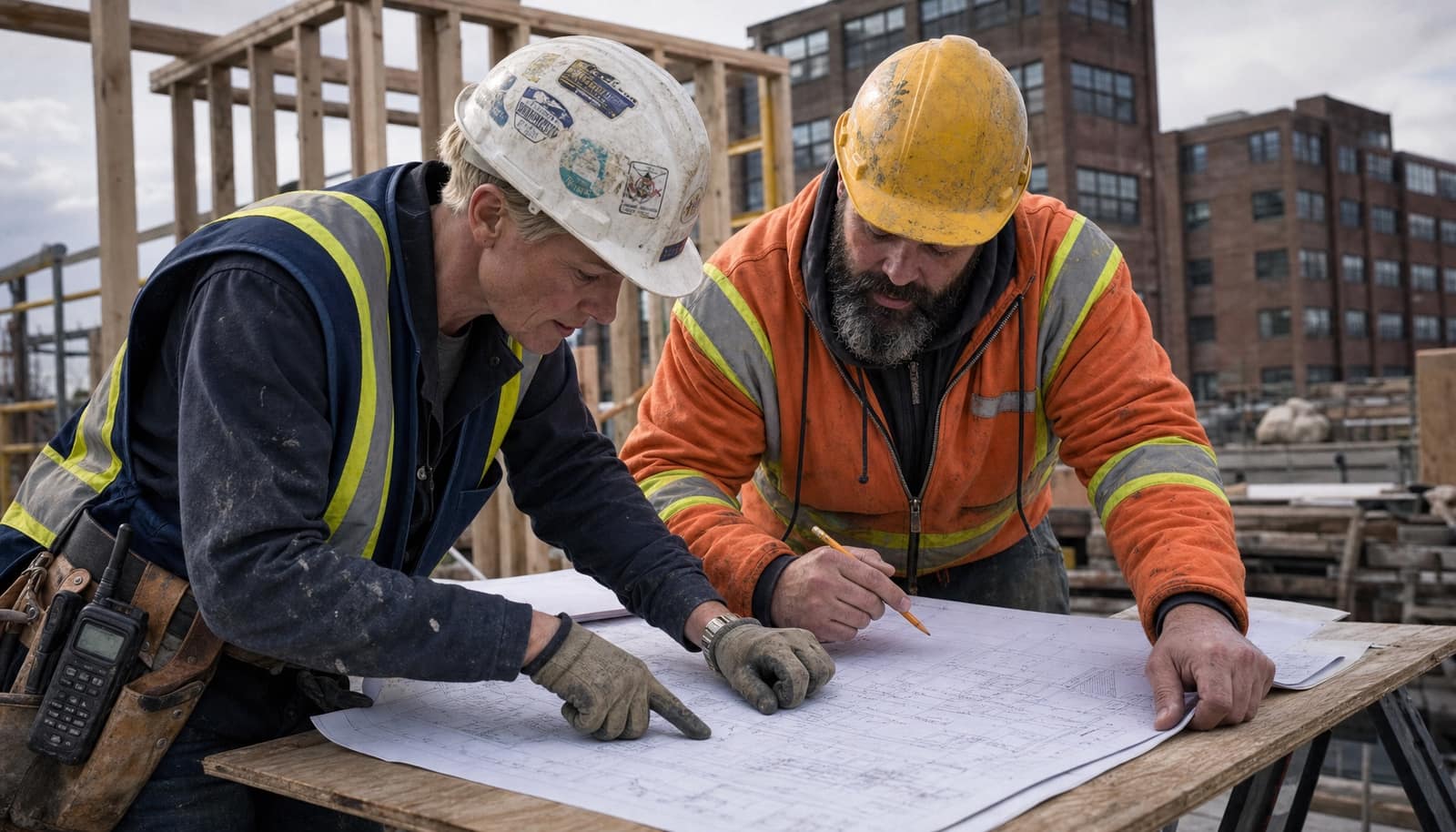
We talk about the trades shortage all the time. Most people hear it and assume the door is wide open. It isn’t.
Landing your first trades job, especially with no experience, is often the hardest step in the whole career. Entry rates stay surprisingly low next to other industries that complain about half the demand. The paradox comes down to four barriers, and none of them get fixed by recruitment posters or career-fair pamphlets.
At Trade Smart College we built our programs around these barriers specifically. Adaptability, professionalism, reliability: the traits that close the gap between what employers want and what new hires actually walk in with. But before any of that matters, you have to see the problem clearly.
Body and head, not just hands
The first misread on trades work is what it asks of you. Some jobs need real physical strength. Most need stamina, precision, and the ability to hold the whole job in your head while your hands are busy.
First-year apprentice turnover is brutal, and a big chunk of it traces back to people who came in expecting it to be all muscle. They get blindsided by the thinking part. An apprentice electrician on a Hamilton service call needs to troubleshoot a fault, keep the homeowner calm, and not kill anyone, all in the same fifteen minutes. That’s not a strength problem. That’s an analytical problem under pressure.

Training programs that drill skills without building the mental side ship graduates who flame out in six months. The math, the spatial reasoning, the read-the-room judgment: those have to be trained on purpose, not absorbed by accident.
The professionalism gap
Trades work is collaborative by default. On a normal day a tradesperson might cycle through three or four crews: their own shop, the GC’s people, sub-trades, the homeowner. That doesn’t run on technical skill alone. It runs on professionalism.
A plumber who shows up late or an apprentice carpenter who argues with the foreman isn’t a nuisance. They’re a liability.
Most training programs treat the soft skills as a footnote. Communication, conflict, showing up at 6:55 for a 7:00 start, calling when you’re stuck instead of guessing: these get a single afternoon module if they get one at all. Then graduates land on a Hamilton site full of seasoned trades and wonder why nobody wants them back tomorrow.
Skipping this in training quietly closes the door on a lot of people who would otherwise be excellent in the field. The technical stuff is teachable in months. The poise to hold yourself together when a client is yelling takes longer, and it has to start in school.
The seasonal squeeze
Trades work runs on the calendar. In Ontario, the deep winter months slow most construction down, and the warm months pile up more work than the crews can handle. Companies have to thread that: staff up enough to survive the surge, stay lean enough to survive February.
The result is a constant cycle of layoffs and recalls. For seasoned hands, it’s annoying but manageable. For someone trying to break in, it’s a Catch-22.
During the busy months, the shop needs reliable hands right now. Nobody has time to babysit a new apprentice through their first slab pour. During the slow months, projects are thin, and there’s no margin to carry someone who isn’t producing yet. So the green hand sits outside the door at the exact moments the door might have opened.
You can’t beat seasonality with motivation. You beat it by walking in already useful.
Thin margins, careful hiring
Most Ontario trades work is awarded through competitive bid. That keeps consumer prices honest. It also flattens the profit margin on every job to something most people outside the industry would find shocking.
Small and mid-sized shops, which is the bulk of the Hamilton trades industry, don’t have the financial cushion to absorb a bad hire. An unprepared apprentice can blow a deadline, damage a finish, sour a client relationship, or cost the shop a future contract. One bad hire on a tight job can flip a project from a small profit to a real loss.
A bad hire on a thin-margin job is the difference between breaking even and writing a cheque.
That economic pressure is why owners look so hard at reliability and focus before they look at anything else. It isn’t gatekeeping. It’s the math of running a shop that bid the job at three percent.
Breaking in
The demand is real. The barriers are also real, and they don’t disappear because LinkedIn says there’s a shortage. Physical and mental readiness, professionalism, seasonal pressure, thin margins: these are the four walls of the room you have to walk through.
We built Trade Smart College to send graduates in already prepared, focused, reliable, efficient, and adaptable. Those aren’t buzzwords on a brochure. They’re the exact five words foremen use when we ask them what they actually need.
The door is narrow. With the right preparation, it opens.