An apprenticeship is a form of education. Knowledge and skill move from a master to a student, who earns a credential, and in many trades that credential is required to work at all. What’s different from college or university is where the learning happens. That changes who pays for it.
It also changes who gets in the door. And it explains why a would-be apprentice should sharpen their professional skills before their technical ones.
Where the costs sit
In a traditional degree program, a college runs the buildings, pays the staff, and stocks the labs. Students pay tuition. Governments chip in. When graduates hit the job market, companies sort through them and hire the ones they want, without paying a dime toward the skills those graduates show up with.
There’s an economic logic to that. Most of what’s taught in a college program is general and transferable. A grad can take those skills to a competitor next Tuesday. So companies, reasonably, pay as little as possible for them.
An apprenticeship flips this. The shop carries most of the cost of training. That single fact reshapes the entire model: who gets hired, how selective the foreman is, and what a candidate needs to bring to the table on day one.
In an apprenticeship, the shop pays the freight. So the shop gets to choose carefully who it pays for.
There are three real costs the company eats: supervision and instruction, lost productivity, and the price of mistakes. Together they often exceed what the apprentice earns in wages.
Supervision and instruction
Apprentices have to be taught by a journeyperson or master. That’s the model. In most cases the ratio is tight: in Ontario’s compulsory trades, it’s 1:1. One master, one apprentice.
That’s a political choice, not a law of nature. Medical interns work under ratios closer to 10:1. There’s no magic to one-on-one supervision; it’s just what the regulations require.
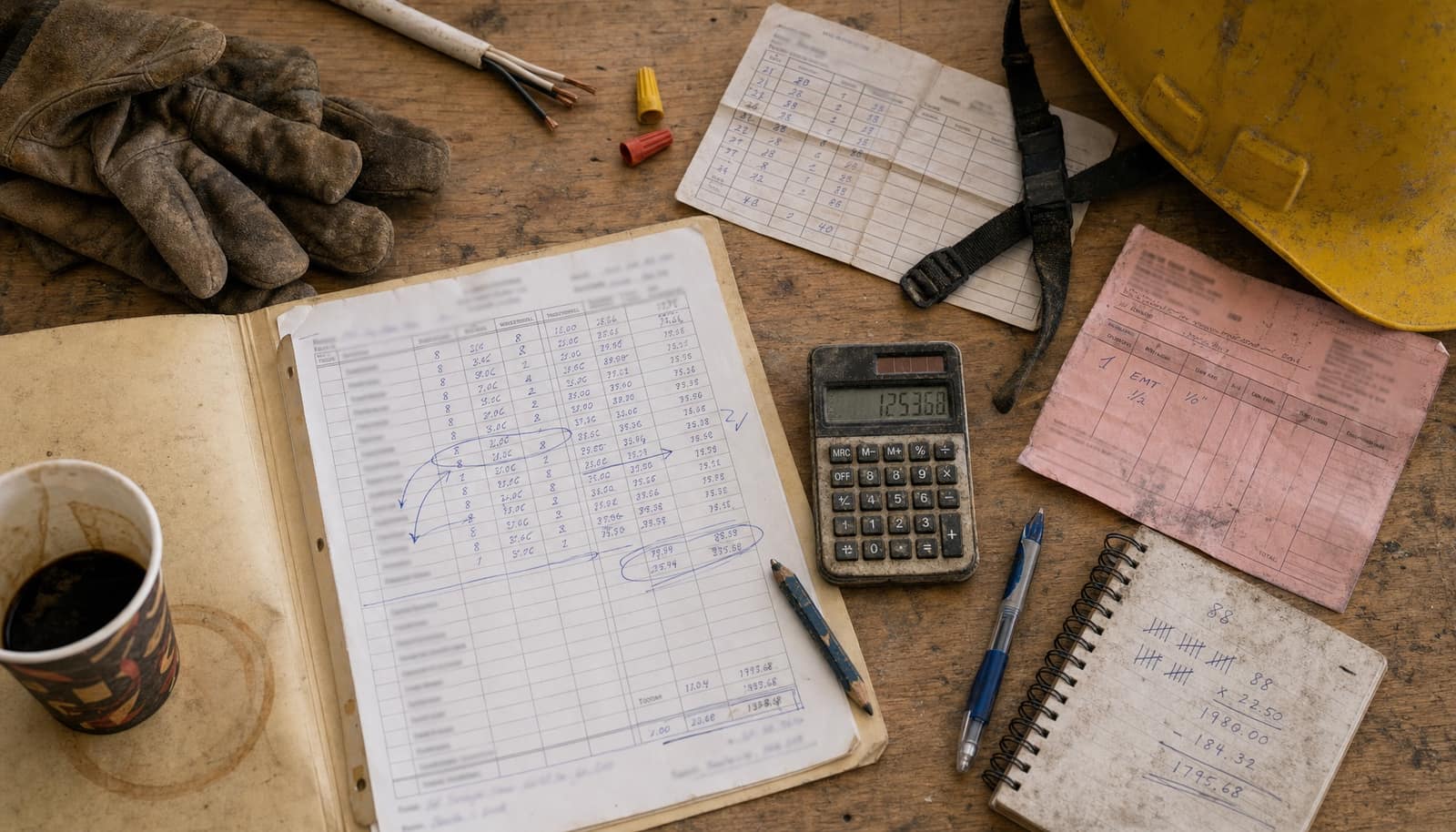
When the journeyperson is teaching, they aren’t billing. You won’t see “master-to-apprentice instruction, 2 hours” on a customer invoice. The shop still pays the journeyperson, often fifty dollars an hour or more, and absorbs that line item itself.
Decreased productivity
The unbillable instruction time is one productivity hit. The slower pace of the work is another. Showing an apprentice how to do something takes time, and the apprentice will be slower at it for years. Sometimes that overage gets passed to the customer. On a competitive bid, it usually doesn’t: the shop swallows the extra hours to win the job.
There’s an upside, and it’s worth being honest about it. An apprentice is an extra pair of hands. They haul, clean up, pack the van, stage materials. That work matters and offsets some of the drag.

But a shop can hire a labourer for that. Labourers cost less than apprentices, and apprentice wages climb every year. The shop accepts the higher cost because both sides are betting on a relationship: the apprentice grows into real responsibility, and they learn, properly, why the so-called menial work matters on every job.
Mistakes and corrections
Every entry-level worker makes mistakes. In some fields the cost is near zero. A grad student misgrades a paper, a student complains, the grade gets fixed. Nobody loses money.
The trades don’t work that way. An apprentice digs a trench to the wrong spec and the whole job stalls until it’s corrected. A sub-trade shows up to a blocked access route because the lumber got staged in the wrong spot. Now there’s a delay, a callback charge, a cranky scheduler.
Neither of those is catastrophic. That’s by design. No foreman in their right mind hands an unproven apprentice a job where the downside is large. A toilet that isn’t seated right leaks into a finished ceiling. A miswired circuit starts a fire. Shops cap the risk by capping what the new person is allowed to touch, until they earn the next rung.
The company that trains you is the company that pays for your mistakes. That’s why they choose carefully.
What this means for would-be apprentices
The popular framing is that apprenticeships are about learning trade skills and getting paid while you do it. Both true. Both incomplete.
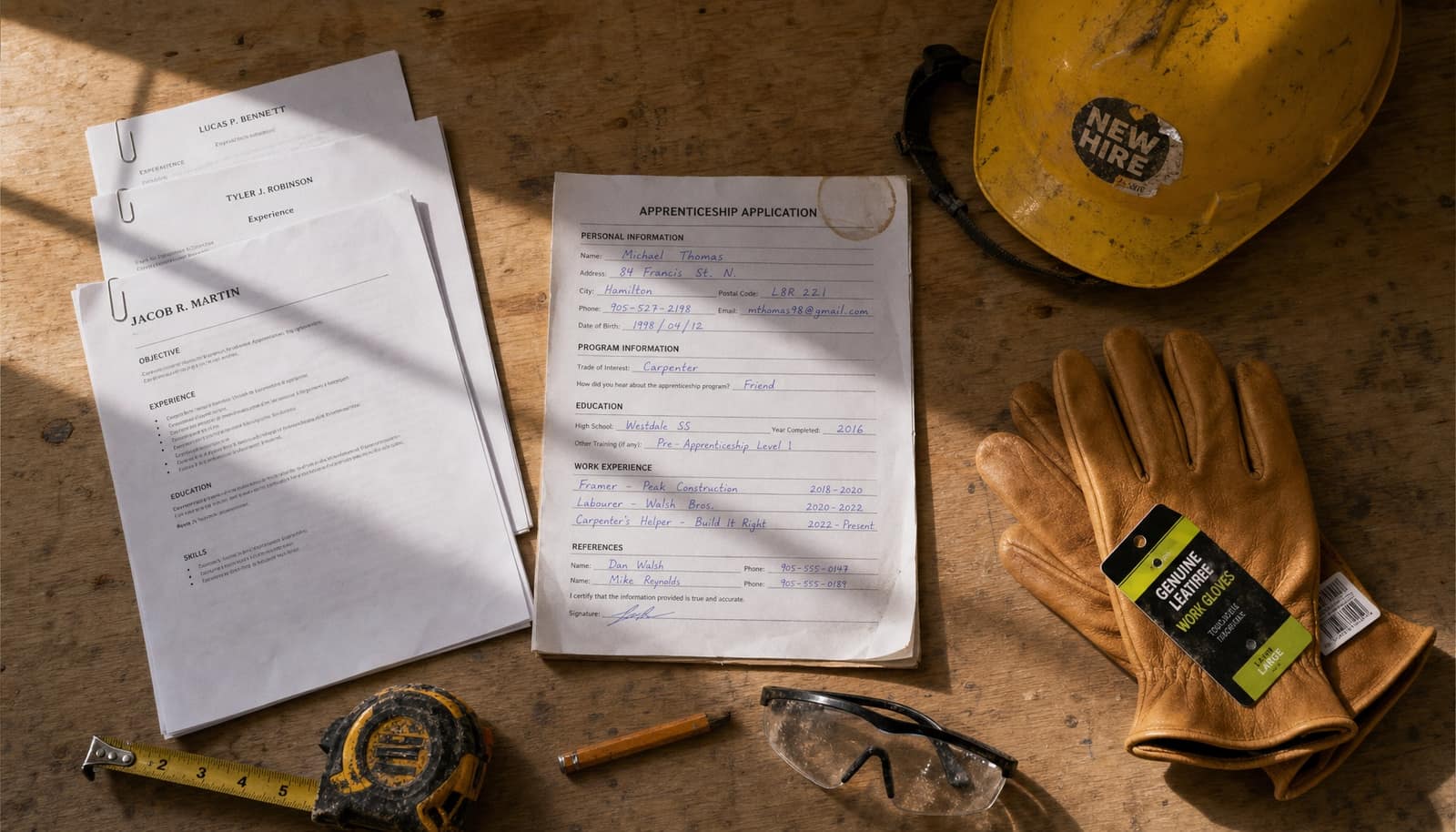
The part that gets skipped: the shop is making a serious financial bet on the person they take on. Supervision time, lost billing hours, the cost of fixing a green apprentice’s mistakes: that’s real money. So shops are selective. They take chances on people who have already proven they can show up, communicate, follow direction, and act like a professional.
Which is why the smartest move before an apprenticeship isn’t to chase technical skills you’ll learn on the job anyway. It’s to build the professional foundation that makes a foreman willing to invest in you in the first place.