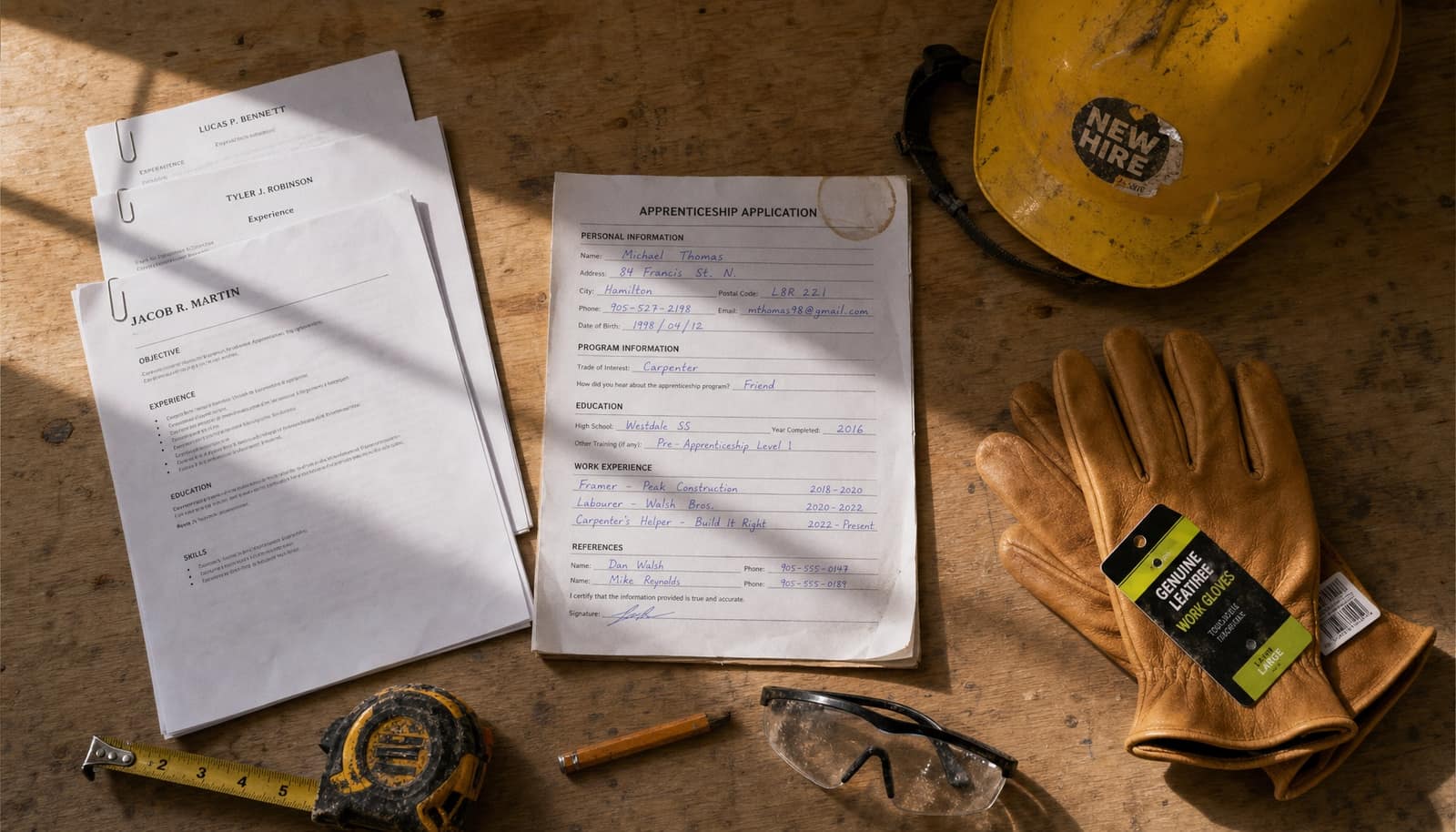
Internships are pitched as the bridge between school and work. For most trades companies in Ontario, they feel more like a tax. The intern shows up green, the foreman loses half a week orienting them, and the shop pays for the privilege of training someone who may or may not stick around.
That’s not a partnership. That’s a hand-off with the consequences pointed in one direction.
Ryan Craig made the case in Forbes that colleges have to get serious about internships, meaning they have to do the work that schools historically pushed onto employers. Sourcing. Screening. Pre-hire training. Mentoring through the placement, not just before it. The shops we talk to in Hamilton, Burlington, and the GTA aren’t asking for charity. They’re asking for an intern who shows up at 6:55 AM, knows what a daily huddle is, and can be trusted with a tape measure.
The administrative tax companies are quietly paying
Sourcing candidates. Onboarding paperwork. HR compliance. Setting up timesheets and safety orientation. Every one of those tasks costs a small business real money, and most of them are tasks the school could absorb.
Craig’s argument is simple: the institution placing the student should carry the load that doesn’t require the employer’s expertise. The employer’s expertise is the work. Everything else is overhead the college can take off their plate.
Most programs drop a student off for six months and hope. That’s not a placement. That’s a wish.
When the shop only has to focus on integrating the intern into the actual work (not chasing paperwork, not running an HR department for one person), the math on saying yes to an internship changes. More shops say yes. More students get placed. The whole thing compounds.
What “ready” actually means on a job site
The other failure mode is academic. A student finishes a semester of theory and shows up at a Hamilton site with no idea what a toolbox talk is, why the foreman wants their boots laced before the truck rolls, or how to write a clean time entry.
Readiness isn’t a credential. It’s a set of habits.
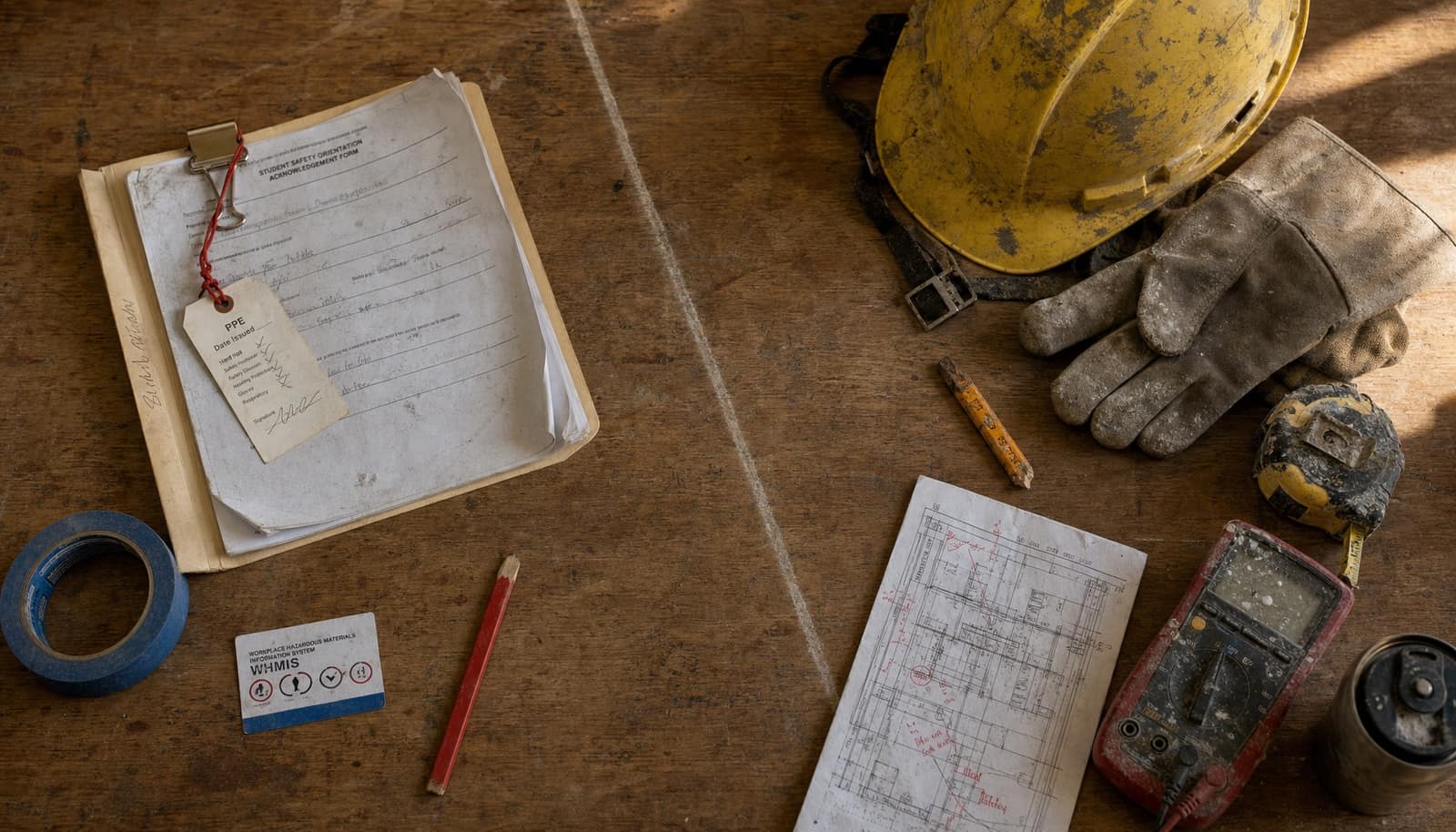
Punctuality. Knowing how to take a direction without arguing it. Logging hours accurately. Asking the right questions and not the wrong ones. Knowing when to shut up and watch. These aren’t taught in a textbook and they’re not absorbed by accident. They have to be drilled before the intern ever sets foot on the site.
When a student understands what the company actually needs (safety protocol, time-tracking, customer interaction, the unwritten rules of the crew), they stop being an extra body that needs babysitting. They become useful. That’s the threshold.
Pre-hire training, and why we don’t drop students off and leave
Pre-hire training is the part most programs skip. It’s also the part that determines whether the internship works.
At Trade Smart College, we don’t run a placement service. We run a continuous engagement. Daily, weekly, and monthly contact points with every student in an internship. The student has a phone number to call when something goes sideways on a Tuesday afternoon. The shop has a phone number to call when the student isn’t pulling their weight, or when they want to expand the scope, or when they just need a sounding board.
The first intern came pre-trained on our scheduling app. That alone was worth the partnership.
The result is that the internship stops being a gamble. The shop knows there’s a real institution behind the student, not a coordinator who’ll return their email in three business days. The student knows they have backup when they hit something they don’t know how to handle. And we, the school, get honest, ongoing feedback about what’s working and what’s not, which feeds back into how we train the next cohort.
We get it wrong sometimes. Not every placement is a success. Some students aren’t ready when we thought they were, and we own that. The continuous-contact model is how we catch it early instead of finding out at the end of six months.
What the model has to look like
If the goal is internships that companies actually want to take on, the college’s job covers four things, in this order:
The school sources and screens the candidate, so the shop isn’t running a hiring funnel for one role. The school trains the student on workplace habits (punctuality, safety, communication, time-tracking) before the placement starts, so the foreman isn’t teaching them how to show up to work. The school stays in active contact through the placement, so problems get caught in week two instead of month five. And the school treats the company’s feedback as a curriculum input, not a courtesy form at the end.
Do those four, and the internship stops being a burden. The shop gets a useful set of hands. The student gets a real apprenticeship-grade experience. The school earns the right to call its placements partnerships instead of hand-offs.
That’s the model we’re building toward. Some of it works already. Some of it we’re still tuning. The shops that have hired our students will tell you both, and we’d rather you hear it from them than from us.