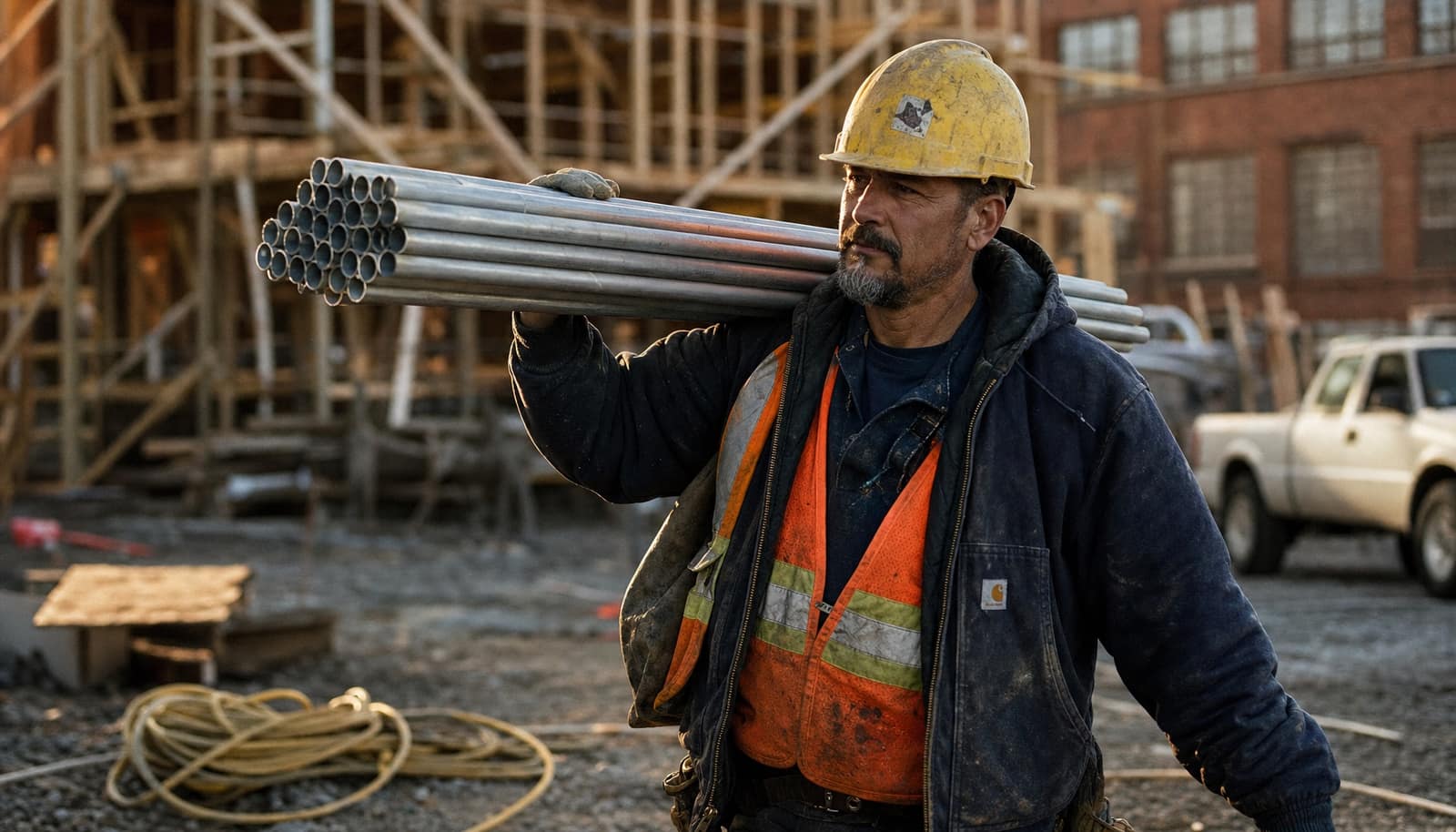
For decades we’ve heard about the shortage of people entering the skilled trades. The problem is getting worse, not better. Projected shortages keep growing, and the standard explanation is that the trades have an image problem.
I don’t buy that. Better marketing of the opportunities won’t fix this.
The shortage by the numbers
The Ontario government says over 100,000 new skilled tradespeople will be needed in the province’s construction industry alone, as it tries to build 1.5 million new homes by 2031. The Canadian Apprenticeship Forum puts the national figure at 163,000 fully certified tradespeople by 2025, which is next year.
Federal, provincial, and territorial governments have answered with programs, incentives, tax credits, and grants. Most of it targets one of three things: raising awareness of opportunities in the trades, employer incentives to hire apprentices, and training programs aimed at under-represented groups. Read the press releases and everything is working. The shortage continues anyway.
The marketing problem we already solved
The common refrain is that people just don’t want trades work because they think it’s a crappy place to spend a life. For the last fifty years, every young person in North America has been told to go to university so they can have a better life. The only thing wrong with that messaging is that it worked too well. A university degree became the only route to prosperity, the only respectable answer.
It was absurd fifty years ago. It’s more absurd today. But like an irrelevant monarch, the residue is still around.
Trades work was one of the casualties. For decades, life on the tools was characterized as nasty, brutish, and short (to borrow Hobbes) compared to the life of a university grad. The trades became the booby prize, picked up only when university was out of reach intellectually or financially.
That misperception has actually started to correct.
The shortage isn’t a marketing problem anymore. The pathway is the problem.
Governments, industry groups, and public colleges have promoted the trades reasonably well in recent years. The story has shifted. People are starting to understand that an apprentice isn’t condemned to die on the tools: there’s a wide range of paths from there into sales, project management, digital work, and business ownership. Parents and high school counsellors are giving young people a more accurate picture, including the part where a four-year degree often doesn’t deliver what it promised.
So the shortage of people entering, and staying, in the trades is no longer a marketing problem. The real challenge is that the pathway itself has been neglected so long it’s hard to walk even when you want to.
There are three main problems along that pathway. I’ll address one here. The others will come in future posts.
Matching local supply with local demand
When the shortage gets quoted at the provincial or national level, nobody asks how it plays out in a specific city or region. If Ontario needs 100,000 tradespeople in construction, most colleges open pre-apprenticeship programs and take as many students as they can fit. The students show up, because they’ve heard the same message about the desperate need for workers, and they assume the opportunity is real.
The numbers get wonky fast.
In some regions, colleges are producing over 200 pre-apprentice graduates a year in a single construction trade, released onto the labour market in two or three batches. The number of actual entry-level positions in that region is often under 50. That’s a recipe for disappointment, and the disappointment is what drives people back out of the trades before they ever started.

At Trade Smart College we start the recruitment process the other way around. We find out how many entry-level jobs we can secure. We don’t admit a student unless we already have an apprenticeship position lined up.
This is not a job guarantee. We don’t expect every student to pass our diploma or meet the requirements of their practicum employer. But we know how many positions are open, in which trades, in this local economy, right now. That’s a lot of qualifiers, and it makes recruitment and admissions harder than it would otherwise be.
Our students are paying us to get them ready for an apprenticeship. It isn’t right to prepare them for jobs that don’t exist.
What still needs fixing
We need more people to start, and to succeed, in the trades. The local, provincial, and national economies depend on it. The marketing problem is largely cracked: most people now understand there are careers in the trades that rival, and often outpace, what a university degree delivers.
The pathway is where the work is now. Matching local supply with local demand is the first piece. Until colleges and employers in a given region are working off the same number, the shortage will keep showing up in headlines while graduates keep showing up to a hiring market that can’t absorb them.