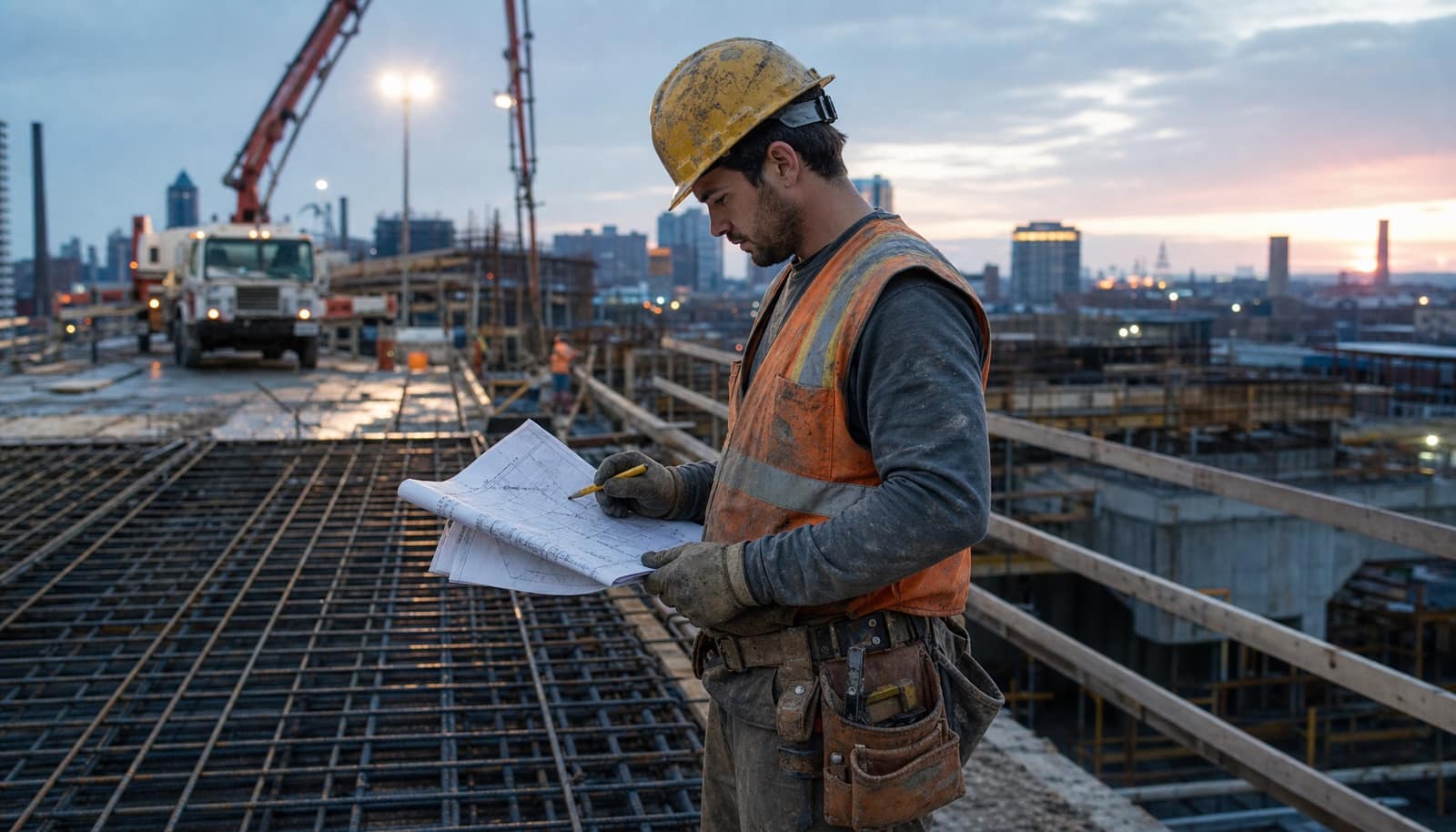
Canada is staring down the largest infrastructure rebuild in its history. Roads, bridges, transit lines, water mains, hospitals, housing: most of it was poured between 1955 and 1985, and the bill is finally coming due. The federal Investing in Canada Plan commits over $180 billion in public infrastructure spending through 2030. Ontario’s Long-Term Report on the Economy extends that runway to 2046.
Concrete and steel get the headlines. The actual story is people. Specifically, the tradespeople who will pour the concrete, set the steel, pull the wire, and tie the pipe.
What $180 billion actually means on the ground
The Ontario government’s own math: every $1 billion of public infrastructure spending creates roughly 10,000 jobs, the bulk of them in the skilled trades. Run that against the federal commitment and you get a workforce demand that doesn’t have a comparable precedent in living memory.
For someone starting an apprenticeship right now, that means a credible 20-year horizon of work. Not “the economy permitting.” Not “if your sector holds up.” Twenty years of carpenters, electricians, HVAC techs, plumbers, ironworkers, and operators booked solid on public projects. Very few university graduates entering the workforce this year can point to anything similar.
Twenty years of work isn’t a forecast. It’s already in the budget.
Qualified isn’t the same as employable
Here’s where it gets honest. The work is coming. That doesn’t mean every ticketed tradesperson is going to ride the wave.
Large infrastructure jobs run on three things: schedule, coordination, and trust. A foreman building a transit tunnel or a hospital expansion needs people who arrive ready, communicate cleanly, take ownership of their piece, and don’t create problems for the trade following behind them. Skill is the floor. The thing above the floor is professionalism, and that’s what separates the carpenter who’s still on the job at month eighteen from the one let go at month three.

Showing up at 6:55 for a 7:00 start. Reading the drawings before someone has to walk you through them. Flagging a conflict on Tuesday instead of explaining it on Friday. None of that is glamorous. All of it is the difference between being indispensable and being interchangeable.
The end of the silo trade
Modern infrastructure doesn’t separate cleanly into one-trade work. A wind farm needs electrical, mechanical, heavy equipment, and structural in the same week. A net-zero hospital retrofit puts HVAC, plumbing, electrical, and carpentry in the same ceiling cavity. A transit station has all of the above plus controls and finishes overlapping by the day.
The tradesperson who only knows their own line of work can still get hired. They just won’t lead. The ones running crews ten years from now are the ones who can read a mechanical drawing as a sparky, or talk control wiring as a pipefitter, not because they hold every ticket, but because they understand how the next trade thinks.

Preparation is the actual differentiator
Employers we talk to keep saying the same thing in slightly different words. They don’t need more bodies. They need bodies that show up thinking. People who manage their own time, anticipate the next step, ask a useful question instead of waiting to be told.
That’s what we build for at Trade Smart College. The technical training is non-negotiable: every program runs through it. But the part that’s harder to teach, and the part employers will pay for first, is the habit of acting like a professional from day one of an apprenticeship. The boom is going to reward that, hard.
I can teach a guy how to swing a hammer. I can’t teach him to want to be there at seven.
A generational opening
Canada’s infrastructure problem is real, and the response is real money. For someone weighing whether to enter the trades right now, the question isn’t whether the work exists. The work exists. The question is whether you’re going to show up to it the way the next twenty years are going to demand.
The country is being rebuilt. The crews aren’t all hired yet.