A visit worth taking seriously
In a previous post, we made the case that first-generation tradespeople deserve the same effort, resources, and recognition we give first-generation university students. Both groups push against the odds. Both deserve to be celebrated when they arrive.
This post is a little different. In February, three federal politicians sat down with our students for forty-five minutes. What happened in that room is worth writing about, partly because of who showed up, but mostly because of what the students did with the time.
Three politicians, one message
There’s broad agreement that opportunities in the trades should be open to everyone. That’s why governments and industry groups have spent millions on awareness campaigns over the last two decades. Awareness isn’t the problem anymore. The pathway is.
Lisa Hepfner, MP for Hamilton Mountain, has been a steady advocate for getting women into the trades. We’ve partnered with her office on two Women in the Trades events at the college. Most women entering the trades are the first women in their families to do so, and she organizes around that fact rather than around it.
Chad Collins, MP for Hamilton East-Stoney Creek, made the local point. Even here, in a city with one of the richest trades legacies in the country, first-generation candidates struggle to break in. If recruitment stays inside the shrinking pool of trades-oriented families, the workforce bottleneck gets ugly fast.
The Honourable Steven McKinnon, Minister of Employment, Workforce Development, and Labour, brought the national frame. Hamilton’s problem is everywhere. The federal interest in building accessible pathways isn’t theoretical. It’s a labour market necessity.
Awareness campaigns don’t get anybody their first day on a job site. Pathways do.
What the students did with the time
Our students prepared. Hours of it. They went through government websites, apprenticeship statistics, mental health and addiction support programs, job market data. Then they showed up with pointed questions for their federal representatives.
The first half of the roundtable was about why they chose the trades. The alignment between what the students said and what the politicians had come to discuss was striking: these weren’t two groups talking past each other. The second half was the students cross-examining policy. Direct questions on apprenticeship supports, on mental health resources, on regional gaps. The MPs left visibly impressed.

The takeaway for the visitors was simple. There are excellent, motivated candidates ready to enter the trades from every kind of background. The pathway just has to exist.
The hardest part isn’t the skills
Trade Smart College was founded to open pathways for people who don’t have family connections in the industry. We tell prospective students this directly: if you have an uncle who can get you a job in the trades, you don’t need us. It’s a lousy sales pitch. It’s also true.
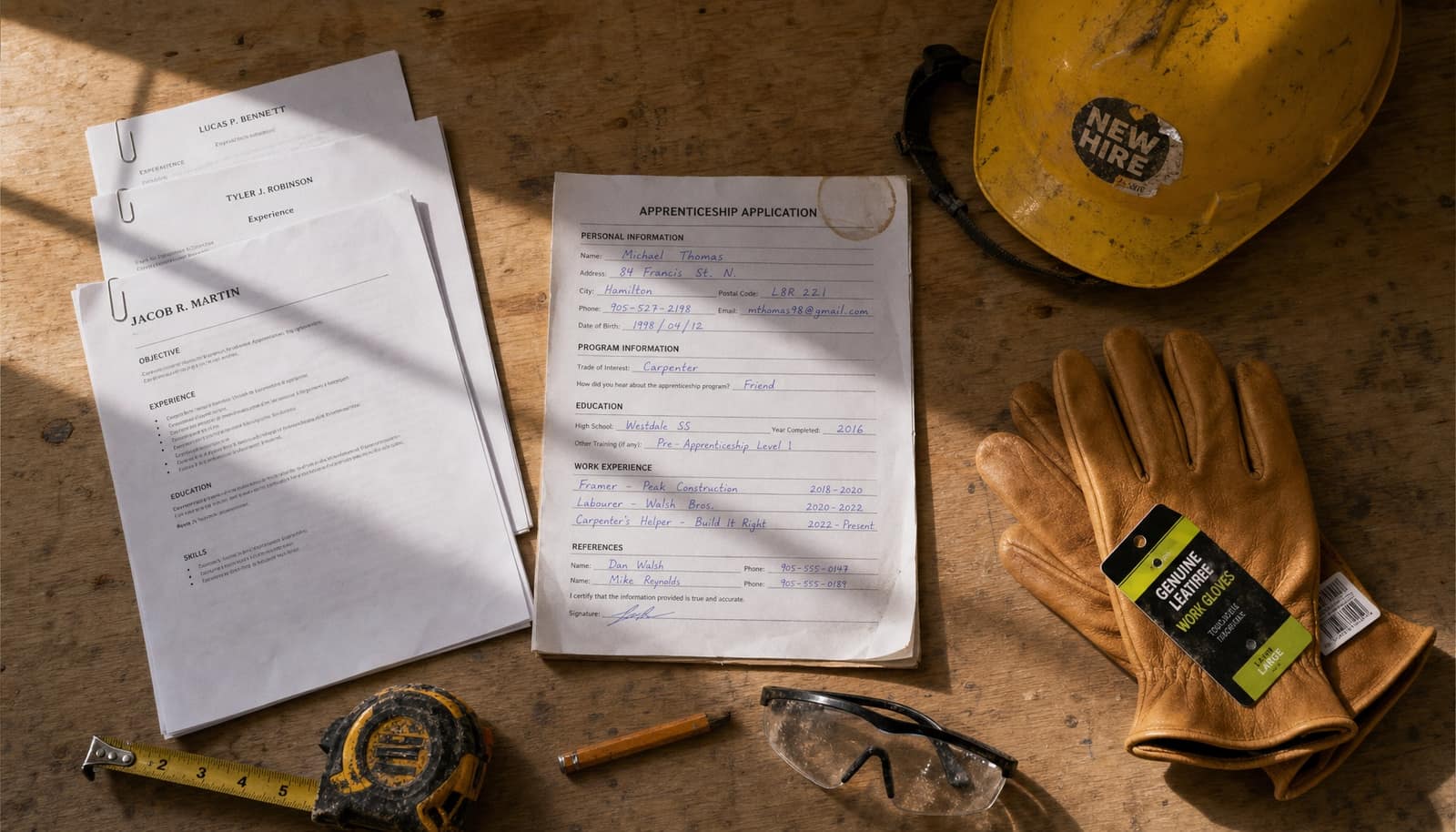
The hardest part of becoming a journeyperson isn’t learning the skills. It’s getting that first job. Trades companies almost always hire through family or prior connection. That’s not a moral failing on their part, it’s how the industry has always worked. And life as a new apprentice carries a stack of unwritten rules that will knock you out of the running if nobody coaches you through them. Show up at 7:00 instead of 6:55. Bring the wrong lunch. Ask the foreman the wrong question on day one. For someone without a guiding hand, those small misses compound.
If you have a family member who can get you a job in the trades, you don’t need us.
The 950 hours
That’s the gap we built the college to close. We teach the unwritten rules. We secure each student 950 hours of paid work experience before graduation. That’s not a job-shadow. It’s not a one-week placement. It’s a real, sustained on-ramp into the industry that doesn’t depend on a last name or a phone call from a relative.
The result is a graduate who has already been on the tools, on a real crew, for the better part of a working year. Employers don’t have to take a flyer on them. They’ve already been vetted by the work itself.
An on-ramp without a last name
The conversation about first-generation tradespeople is overdue. Universities have championed first-gen students for years. The trades have not, partly because the industry’s hiring patterns made it invisible, partly because nobody was building the structure to fix it.
Trades careers shouldn’t be reserved for the people lucky enough to have an uncle in the business. The politicians who came through in February heard that message clearly from our students. If policymakers, employers, and educators are serious about the next generation of the workforce, the support has to flow toward programs that put students on real job sites for real hours.
Opportunity shouldn’t depend on your last name. That’s the whole point.