Workplace readiness in the trades isn’t a soft skill. It’s the difference between the apprentice who lasts a year and the one who gets handed the keys to the truck. Technical chops matter, but employers will tell you straight: they can teach the technical side. What they need is someone who shows up, listens, and doesn’t fold when the day goes sideways.
This piece is about the routines underneath that. The habits that make a tradesperson reliable on a Tuesday morning in February when nothing is going right.
Communication is a routine, not a personality trait
Trades work is teamwork. A finish carpenter talking to a client. A four-person crew framing a deck. A foreman coordinating six subs on a commercial fit-out. All of it runs on communication, and the good crews don’t leave that to chance. They routinize it.
Written messages move through construction management software so the tools and the back office are looking at the same information. Verbal instructions get relayed in daily huddles, call-and-response checks before a lift, planning sessions before a complex pour. Nonverbal cues, the part most people never think about, get coached.
No one wants a slow-moving, slovenly tradesperson on their jobsite. Or one who can’t seem to put the phone away.
That last part trips up more apprentices than any technical gap. They get written up, or fired, for sending the wrong signals. Slumped posture. Eyes on the screen. Half-listening to the foreman. We teach our students to build deliberate routines around the impression they make, because clients and teammates read those signals long before they read your work.
Time management starts before the shift
Skilled trades run on tight margins and tighter deadlines. The tradesperson who shows up at 6:55, knows what they’re building today, and has their tools sorted is already an hour ahead of the one who’s still drinking coffee in the truck at 7:15.
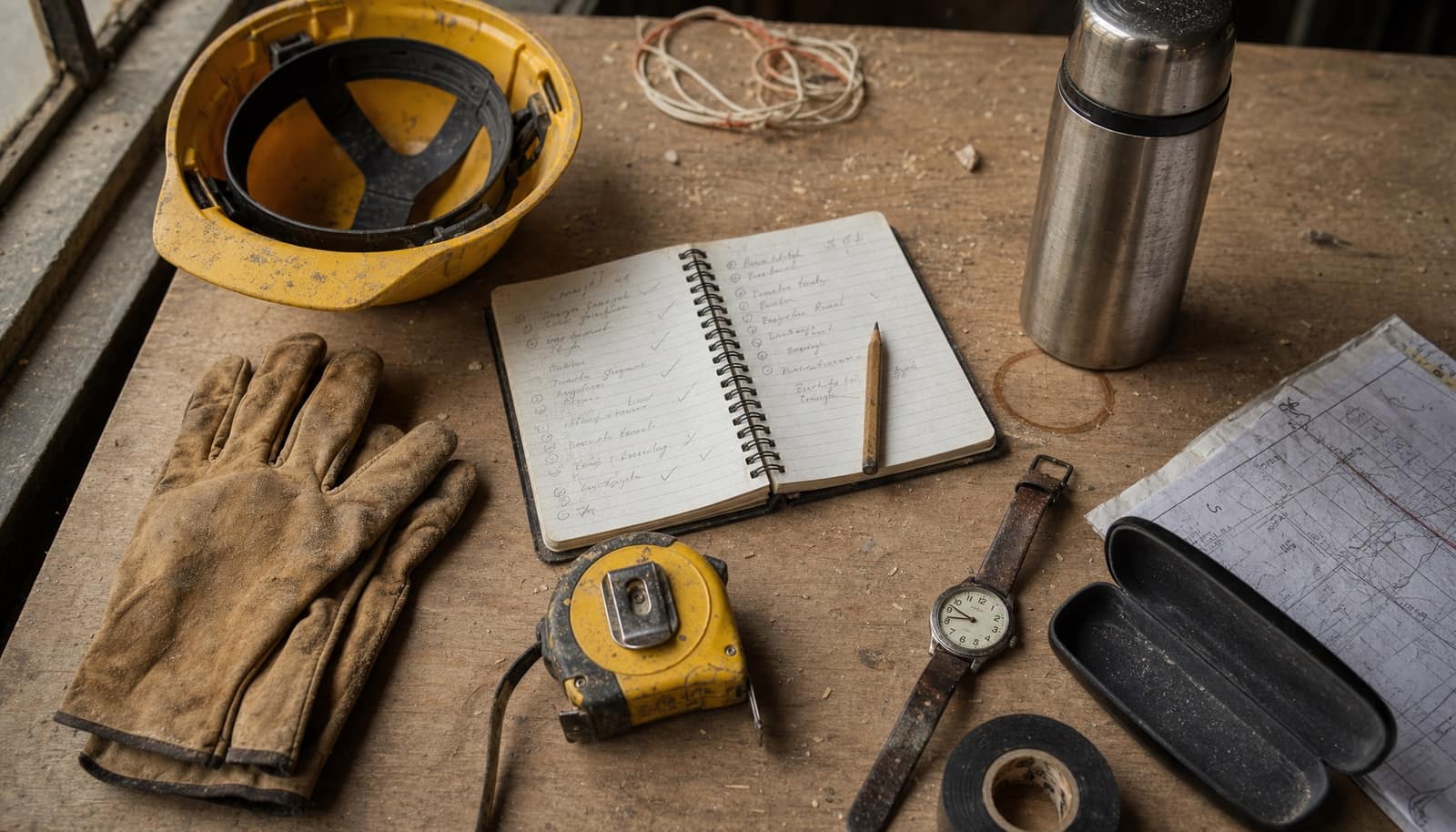
Most people try to organize themselves during the workday. The good ones organize themselves before it. Daily goals set the night before. Tools laid out the same way every morning. Task list reviewed at start and end of every shift. None of this is glamorous. All of it compounds.
Then there’s staging. Experienced builders will tell you that 70% of construction is staging: moving, organizing, and managing materials, crew, and waste. The actual cutting and fastening is the small part. Workers who build routines for tool maintenance, inventory checks, and workspace organization cut downtime hard. That shows up on the bottom line of every project they touch.
Perseverance is a routine too
Weather delays. A material shortage. A drawing that doesn’t match the field conditions. The job throws curveballs every week, and the tradespeople who keep their heads through it aren’t built different. They’ve built habits that hold.
The two routines we hammer hardest with our students: work on one task at a time, and stay off the phone. That sounds almost insultingly simple. It isn’t. Single-tasking and phone discipline are the foundation of toughness on a jobsite. They’re what let you stay with a problem long enough to solve it instead of bouncing to the next distraction.
The second piece is documentation. Photos of completed work. Logged solutions to weird issues. Archived drawings and product specs. When a crew documents routinely, the whole shop gets smarter: every problem solved becomes a reference for the next person who hits it.

A culture of readiness
We get this wrong sometimes. Some students come through the program and the routines don’t stick: they revert to old habits the minute they’re on a real site. We share that honestly. Routines are taught, but they’re built by the person doing them, day after day, for a long time before they feel automatic.
What we’re sure of is the shape of the work. Communication, time management, perseverance, problem-solving: these aren’t extras layered on top of technical skill. They’re the foundation it sits on. Ontario’s trades workforce needs both, and the people who treat readiness as a daily practice are the ones who’ll still be doing this work, well, twenty years from now.