For decades the trades ran on paper. Handwritten timesheets, carbon-copy invoices, a binder in the truck. That worked. It doesn’t anymore.
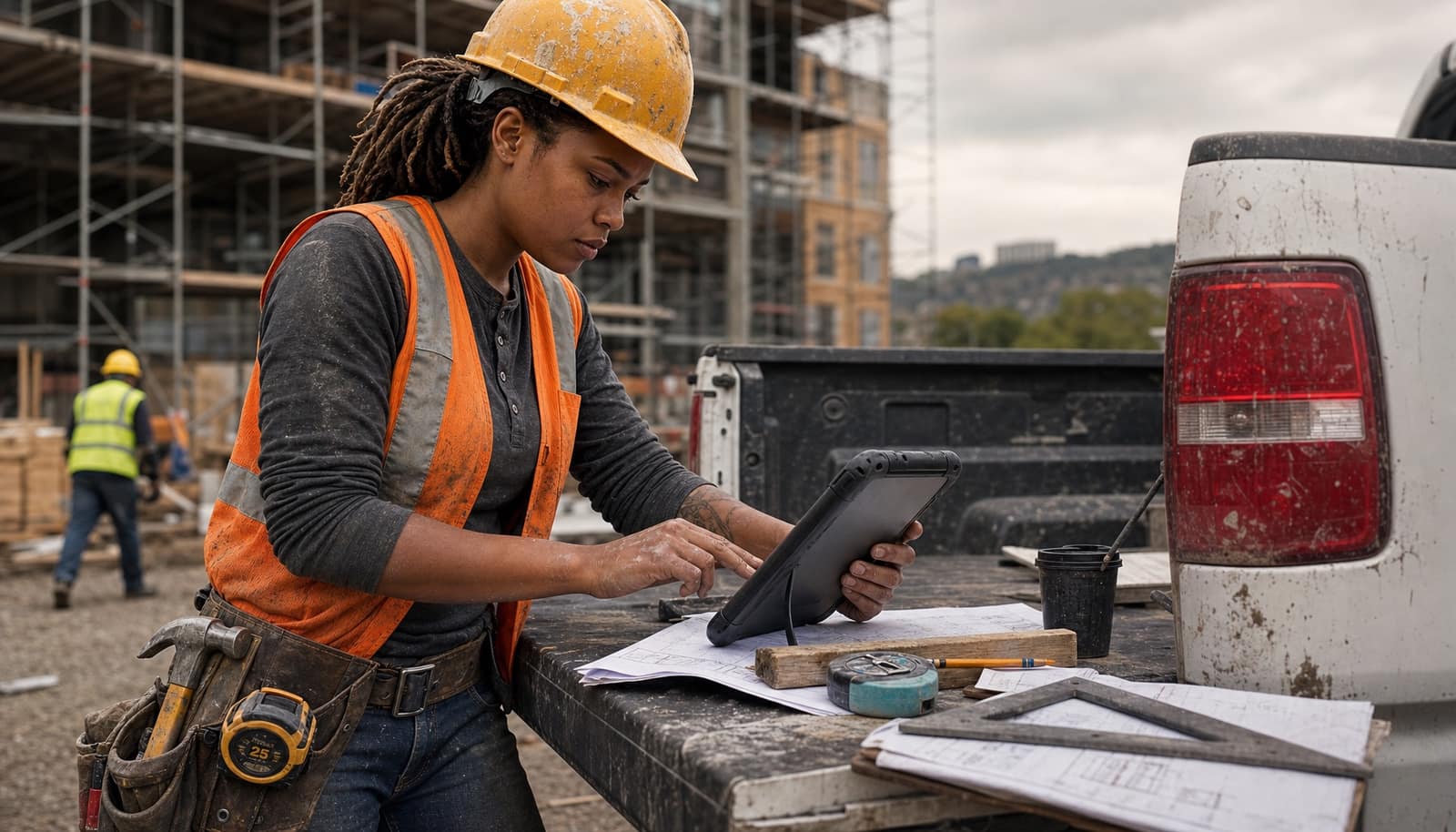
Walk onto any well-run jobsite in Hamilton and you’ll see a foreman with a phone in one hand and a coffee in the other, logging hours and flagging a material shortage before lunch. The shops hiring our graduates want people who can already do that, not people who’ll learn it eventually. So we put the software in their hands on day one. Jobber, specifically. From their first project.
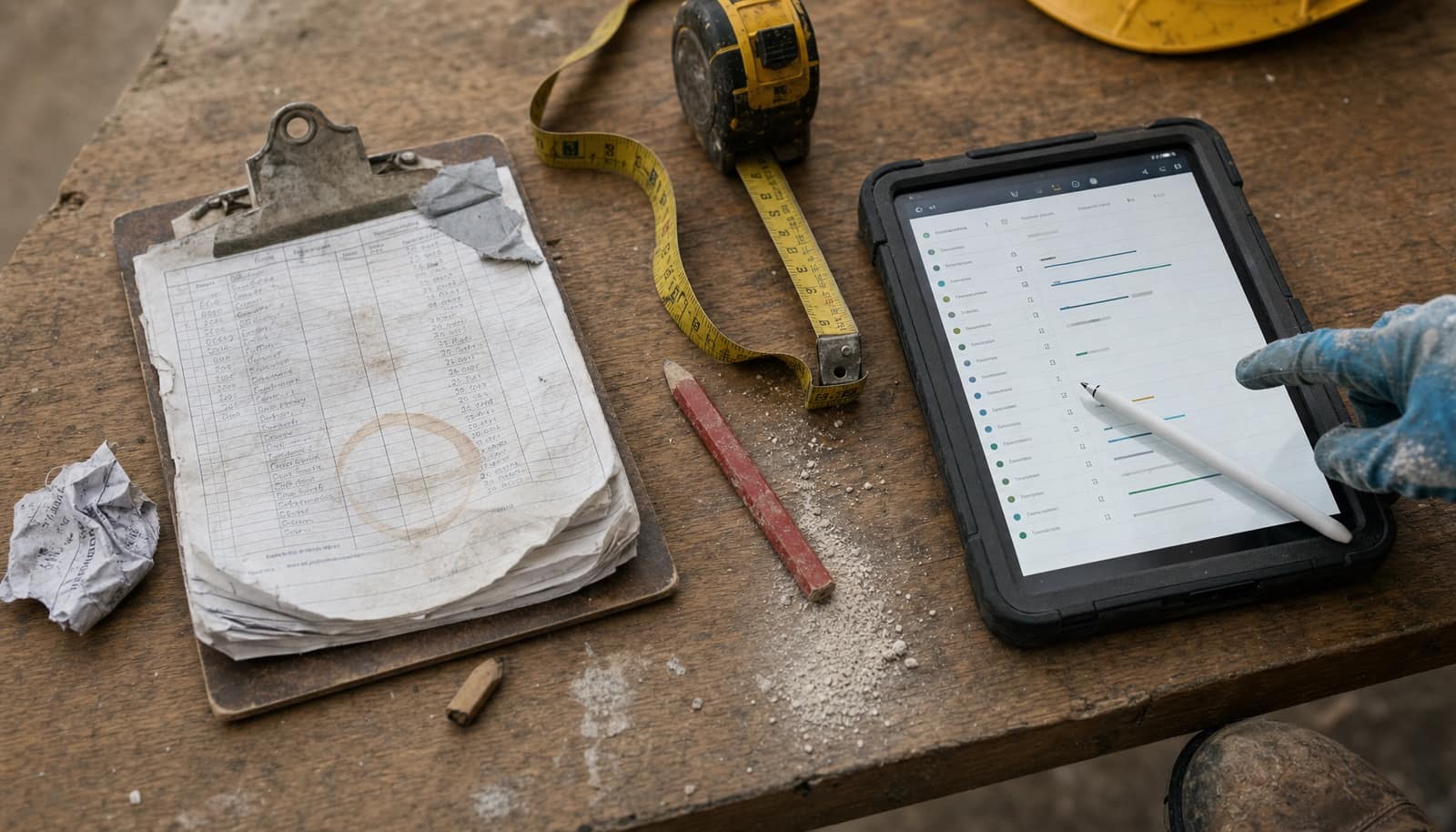
The clipboard isn’t gone. It’s just sitting next to the tablet now.
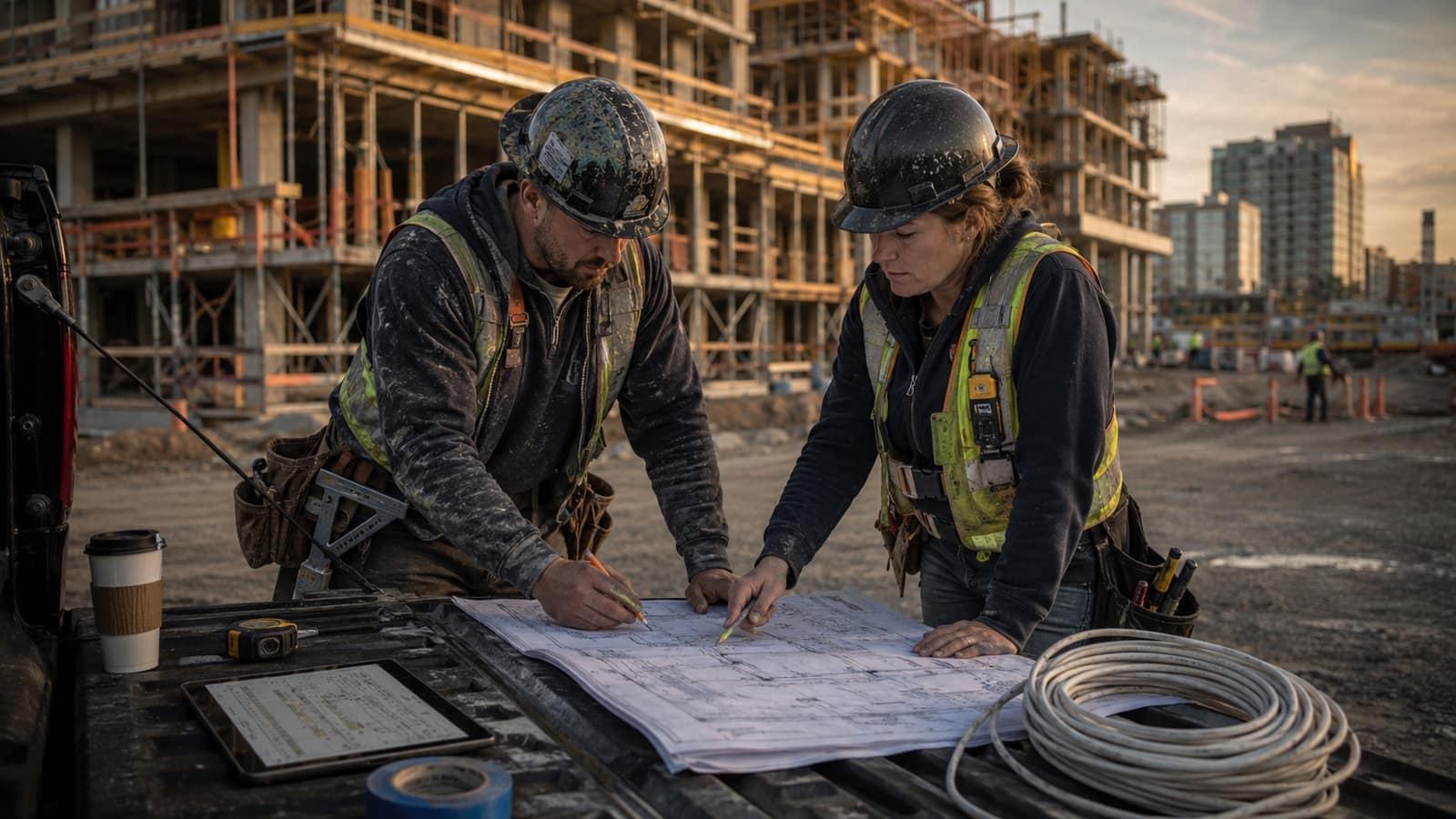
Tracking labour and materials in real time
The fastest way to lose money on a job is to not know where your people and your stuff are. A crew waiting on a missing box of fittings burns an hour. An hour is a lot of fittings.
Construction management software fixes most of that. Inventory levels update as material moves. Hours get logged against the right job code. When a student learns to do this in school (not on their second week of a real job, with a foreman watching), they show up ready to actually contribute. They become the apprentice who flags the shortage Tuesday afternoon instead of the one who finds out about it Wednesday morning.
Killing the back-office headache
Ask any trades business owner what eats their weekend. It’s not the work. It’s the paperwork.
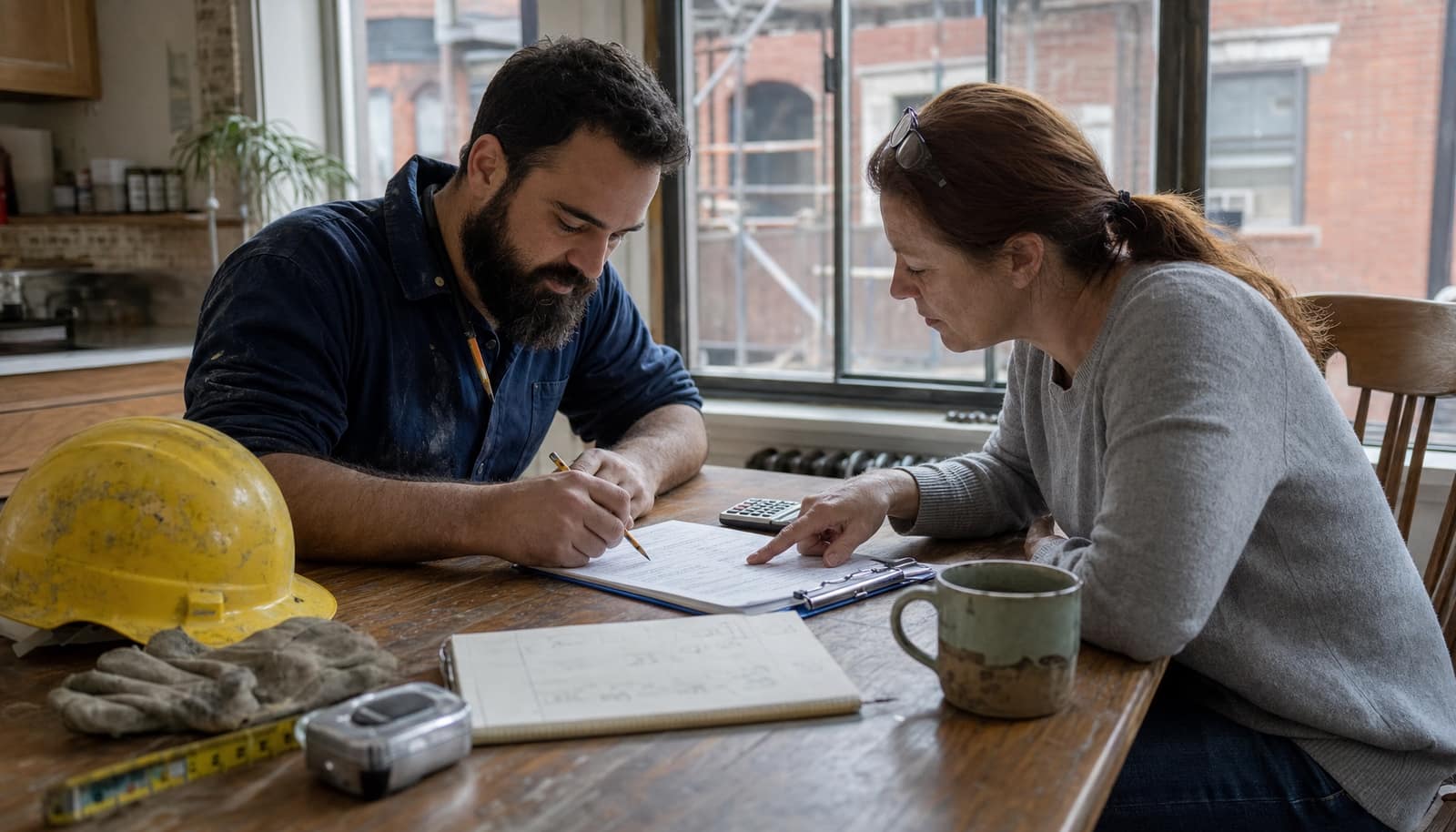
Lost invoices. Billing errors. The job that wrapped six weeks ago and still hasn’t been paid because someone never sent the final number to the office. Learning to log accurate, concise information from the field (every day, not in a Friday-afternoon panic) is the habit that separates a reliable tradesperson from a frustrating one.
We tell students bluntly: your foreman’s job is hard enough. If your daily report is clean, on time, and accurate, you’ve already made yourself worth keeping.
A record you can actually use later
Every job is a lesson. The problem is most lessons get forgotten by the next job.
Software changes that. The decisions, the timelines, the change orders, the material call-outs: they’re all sitting there, searchable, six months later. A second-year apprentice who can pull up a similar past job and see how the crew handled a tight schedule isn’t relying on memory or gut. They’re working with evidence.
That’s a different kind of tradesperson. That’s the one a foreman trusts with a quote.
Memory fades. The log doesn’t. Teach them to write it down the same day, every day.
Habits, not features
Here’s the part most schools miss. Software isn’t the point. The habit is.
We integrate Jobber into the curriculum from week one because habits formed early stick. A student who logs hours every shift for two years doesn’t have to think about it on the jobsite. It’s just what they do. Same with material tracking. Same with closing out a job properly. By the time they walk onto a real crew, the routine is already there.
We get this wrong sometimes. Some students push back early. They want to do “real work” without the screen. We push back harder, because the shops we place graduates with have told us, repeatedly, what they want: someone who shows up with their hand tools and their digital tools, and knows how to use both.
What this looks like at hire
A graduate who can frame a wall is good. A graduate who can frame a wall and close out the job in the system the same afternoon is the one who gets the call back. That’s the whole argument.
Tools and technology. Both pillars. Neither optional.