The story beats the bullet point
Most candidates answer interview questions like they’re filing a tax return. Yes, I worked there. Yes, I know how to use that tool. The facts are accurate. Nobody remembers them.
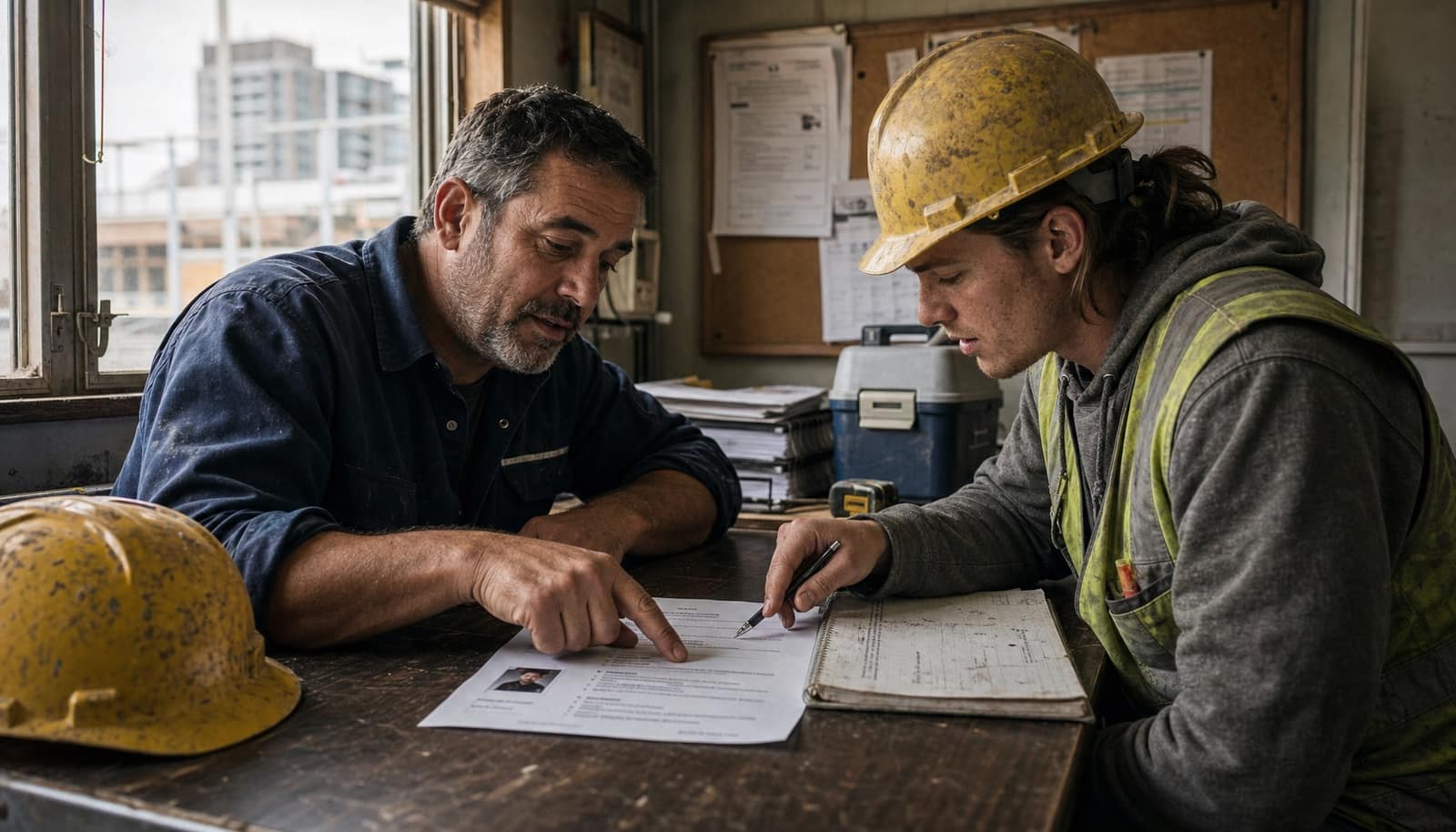
A foreman across the table from you isn’t running a checklist. He’s trying to figure out what you’d do at 7 AM on a Tuesday when something goes sideways. Bullet points don’t tell him that. Stories do.
Try the difference. “I worked with a team to build a deck” lands flat. Now: “We had three days to build a deck for a client who’d already booked the patio furniture delivery. I took the framing layout, my buddy ran the cuts, and we split the railing work between the two newer guys. Long days. The client tipped us.” Same job. Different signal.
That second answer shows you can read a crew, divide work, and finish under pressure. You didn’t claim any of it. The story did.
A foreman isn’t running a checklist. He’s trying to figure out what you’d do at 7 AM on a Tuesday when something goes sideways.
The resume an employer actually reads
Most trades resumes look identical. Certifications, job titles, dates, three vague lines about “various projects.” The reader’s eyes glaze. Yours goes in the same pile.
Switch your thinking. The foreman scanning your page is not hiring a list of tickets. He’s hiring habits. Shows up. Asks questions. Doesn’t disappear after lunch. Tells the truth when something gets miscut.
One thing that works: a short Professional Values section near the top. Three lines, concrete:
- Prepared. First on site, tools sorted the night before.
- Focused. Finished the apprenticeship project two weeks early.
- Reliable. Zero missed days across the eight-month placement.
That’s not fluff. Each line is a claim a reference can confirm. The certifications still go below (they matter), but the values section tells him who you are before he even gets there.

Curveballs, and how to take them
Everyone rehearses “tell me about yourself.” Few people rehearse the question that actually matters.
Trades employers throw soft curveballs to see how you think. What would you do if you spotted a mistake on the project plan? Your partner cuts a stud short. What’s the move? You’re new on a crew and the lead asks you to do something you’ve never done. Now what?
There’s no trick answer. They’re watching for two things: do you act, and do you tell the truth. A reasonable response to the project-plan question sounds like: “I’d double-check it against the prints with someone, and if it’s still off, I’d flag it to the supervisor before we cut anything.” That answer says you don’t panic, you don’t hide it, and you don’t try to fix it alone.
Practice three of these out loud before an interview. Not memorized, just spoken once or twice so the muscle is warm.
Growth as a credential
The last move on your resume is the one most people skip. Show what each job taught you.
“Carpenter’s Helper, 2022 to 2023” is a date range. It tells the reader nothing. Compare:
Carpenter’s Helper, 2022 to 2023. Learned precision layout from a senior framer; ran my own measurements by month four. First exposure to permit drawings and inspection sequencing.
Same job. Now the reader knows what you can actually do, who taught you, and how fast you picked it up. The phrase that closes the deal isn’t experienced. It’s learned quickly. Every foreman has trained someone. He knows what that looks like on paper.
I don’t need a guy who knows everything. I need a guy who learned something the last place he worked.
What we tell our students
We get this wrong sometimes too. Early cohorts at Trade Smart College had students walking into interviews with strong tickets and weak answers. The hires went to candidates with less paper and better stories. We adjusted.
Now we drill it. Mock interviews with real foremen. Resume edits where we strip the corporate filler and put the values section up top. Curveball practice in pairs. None of it guarantees a hire. That’s on you, on the day. But it puts you in the room as the person they remember after the last interview is done.
Getting hired is the start. The way you show up to that first conversation is the same way you’ll show up to the next ten years of them.