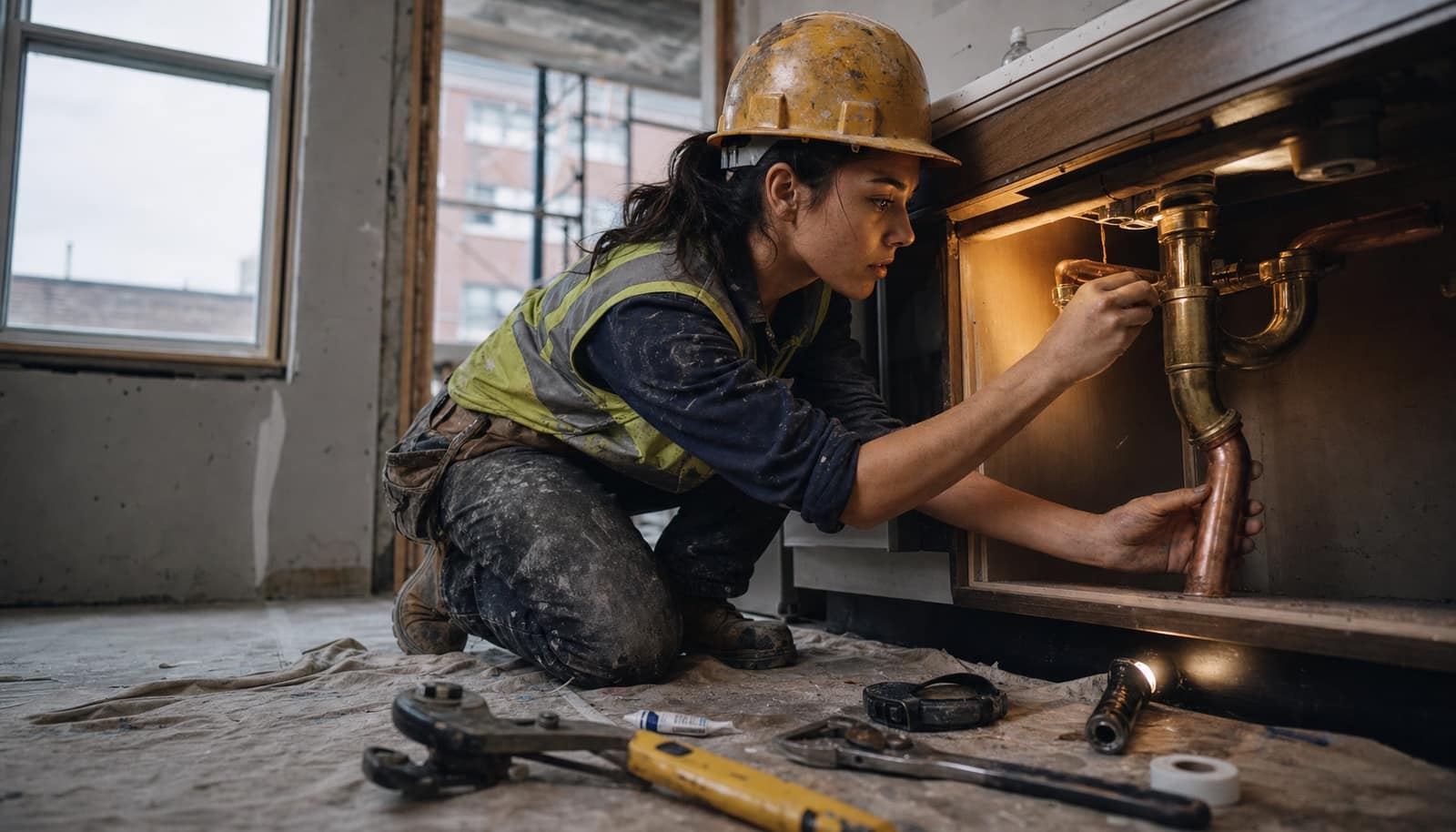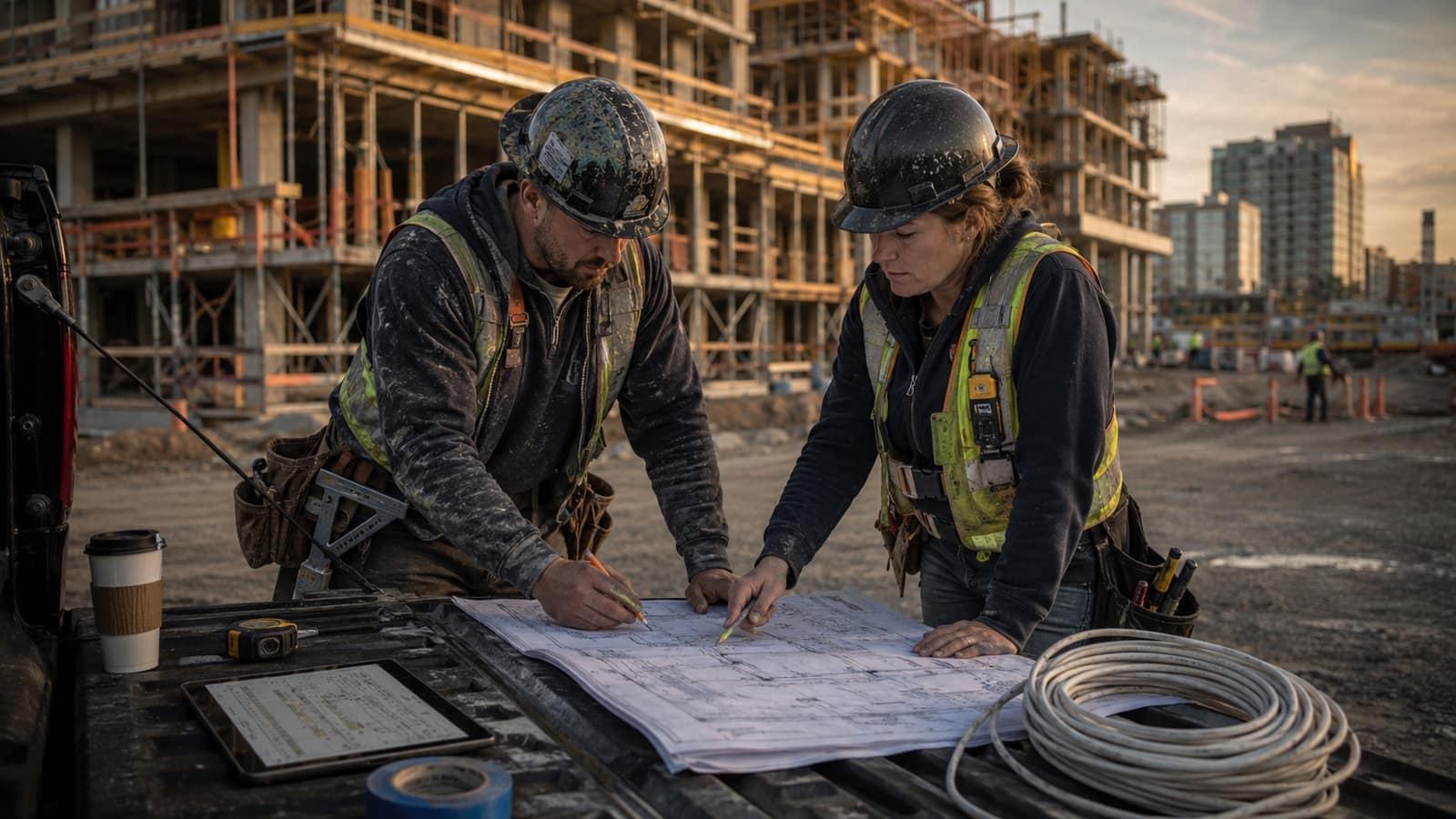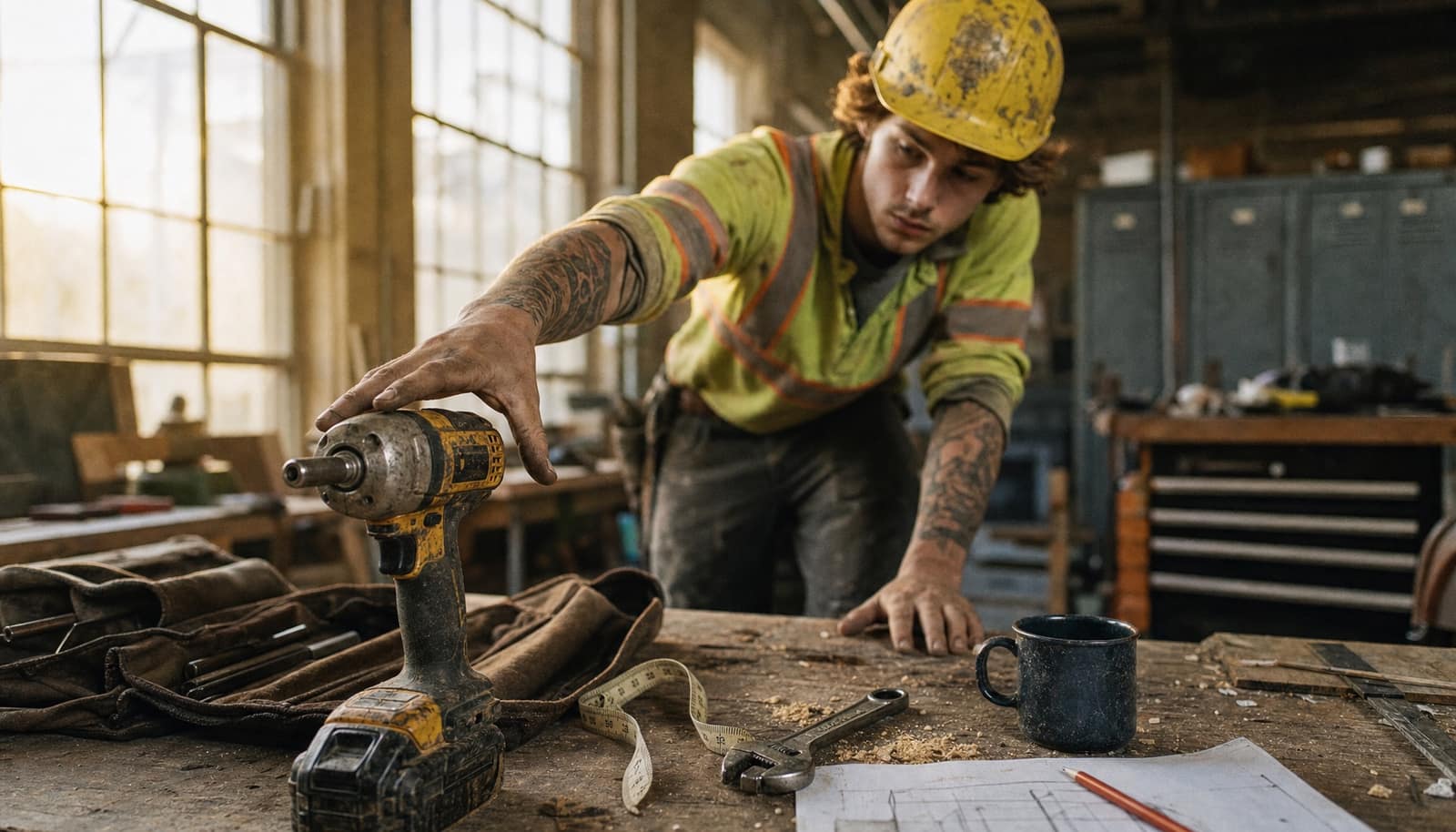
A finish carpenter once told me he could tell within five minutes whether a new hire was going to make it. Not by how they framed a wall. By how they laid out their tools on the floor.
Tools say things. They say whether you’ve been doing this six months or sixteen years. They say whether you respect the work or just need the cheque. The trades run on tools the way a kitchen runs on knives, and most of what separates a clean job from a callback comes down to choices made before the first cut.
The right tool for the work
An electrician without insulated screwdrivers is a story waiting to happen. A carpenter eyeballing a cut instead of reaching for the speed square will eat the lumber, the time, and the trim that has to come out later. The Canadian Centre for Occupational Health and Safety lists wrong-tool and worn-tool use among the leading causes of hand-tool injuries on Canadian sites. None of this is news to anyone who’s worked a job for more than a season.
What’s worth saying out loud: tool selection is a skill, not a shopping trip. Torque-controlled drivers exist for a reason. Impact wrenches exist for a reason. The reason is usually that someone got hurt, or something failed, before the spec was written.
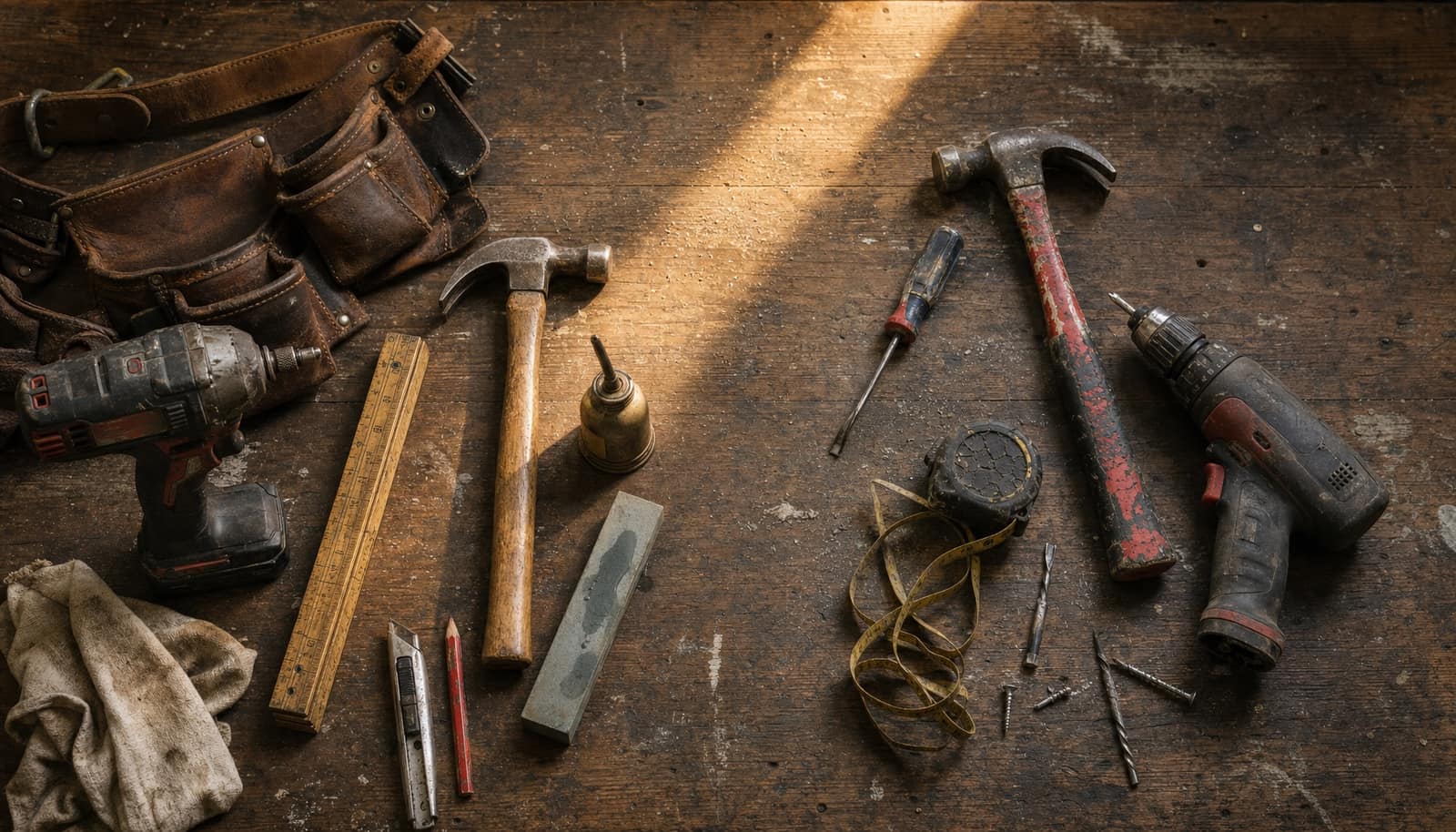
When the right tool is in the right hand, the job moves. When it isn’t, you’re paying twice: once in time, once in rework.
Maintenance is the difference
A neglected tool isn’t a tool. It’s a hazard with a handle.
Inspection, cleaning, lubrication. Boring words. The American Society of Safety Professionals will tell you that regular maintenance prevents the sudden failures that put people in emergency rooms: a chuck that locks up, a blade that walks, a cord that’s been arcing inside the jacket for a month. The Occupational Health and Safety Journal puts it sharper: roughly 70% of workplace hand injuries are preventable with proper precautions and tool care.
A neglected tool isn’t a tool. It’s a hazard with a handle.
The shop habit that separates the careful from the careless is the end-of-day fifteen minutes. Wipe the blades. Check the cords. Put it back where it goes. The crew that does this keeps tools for a decade. The crew that doesn’t replaces them every two years and bleeds money the whole time.
Brand versus performance
Milwaukee. DeWalt. Bosch. Makita. Every shop has its loyalties, and every loyalty has a story behind it, usually a tool that survived something it shouldn’t have.
Brand loyalty is real and mostly earned. But it isn’t the whole picture. Some lesser-known manufacturers build specific tools that match or beat the names, especially in narrow applications. The tradespeople who’ve been at this longest tend to make the call on performance, not the logo on the side. They borrow a tool from a buddy. They run it for a week. They decide.
Performance-based thinking sounds obvious until you watch a young apprentice drop $400 on a brand-name combo kit because his journeyman has the same one. The journeyman bought his because it works on his job. That doesn’t mean it works on yours.
The best tool I own cost me sixty bucks at a swap meet. The worst one cost three hundred at a big-box.
Ergonomics and the long career
The trades are physical. Most people who leave the trades don’t leave because they got bored. They leave because their back went, or their wrists did, or their shoulders won’t lift over their head anymore.
Ergonomics is the quiet part. Cushioned grips, balanced weight, vibration dampening: these aren’t comfort features. They’re career-length features. The CDC’s ergonomic research is blunt about the math: targeted ergonomic interventions cut injury rates significantly in physically demanding industries. Mechanics running impact wrenches all day are looking down the barrel of hand-arm vibration syndrome if the tool isn’t built for it.

A comfortable tool also means a focused tradesperson. Pain breaks concentration. Concentration breaks make mistakes. Mistakes cost money. The line from grip design to job-site error rate is shorter than most people realize.
What the tool says about the worker
Tools are not props. They’re partners. The careful selection, the daily maintenance, the willingness to test performance over brand, the attention to how a handle sits in the hand, all of it adds up to the same thing: a tradesperson who plans to still be doing this in twenty years.
That’s the difference we try to teach. The first-year apprentice who learns to wipe down his sawzall before he packs the truck is already ahead of the journeyman who doesn’t. The tools are how the work gets done. They’re also how the worker survives the work.