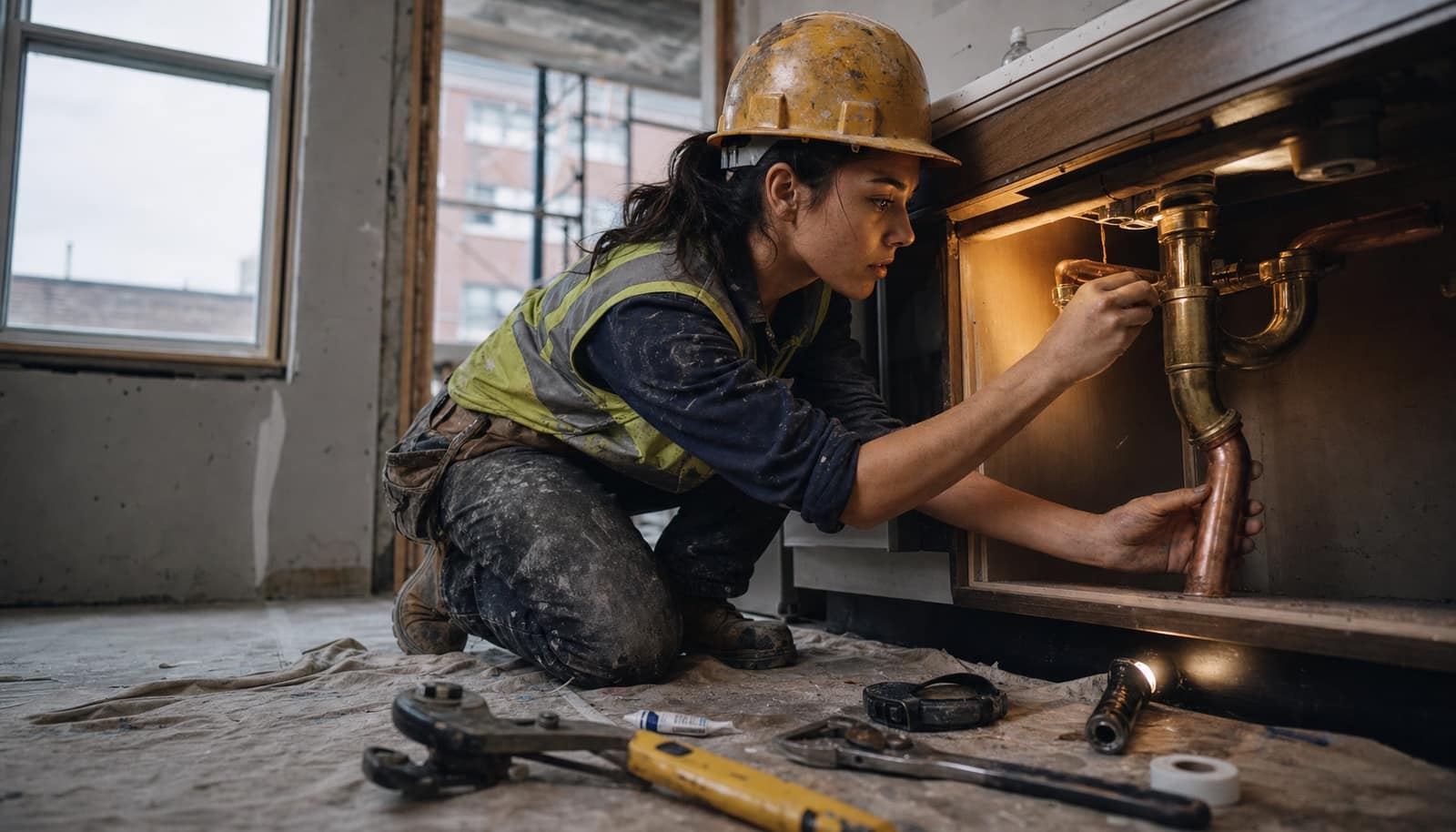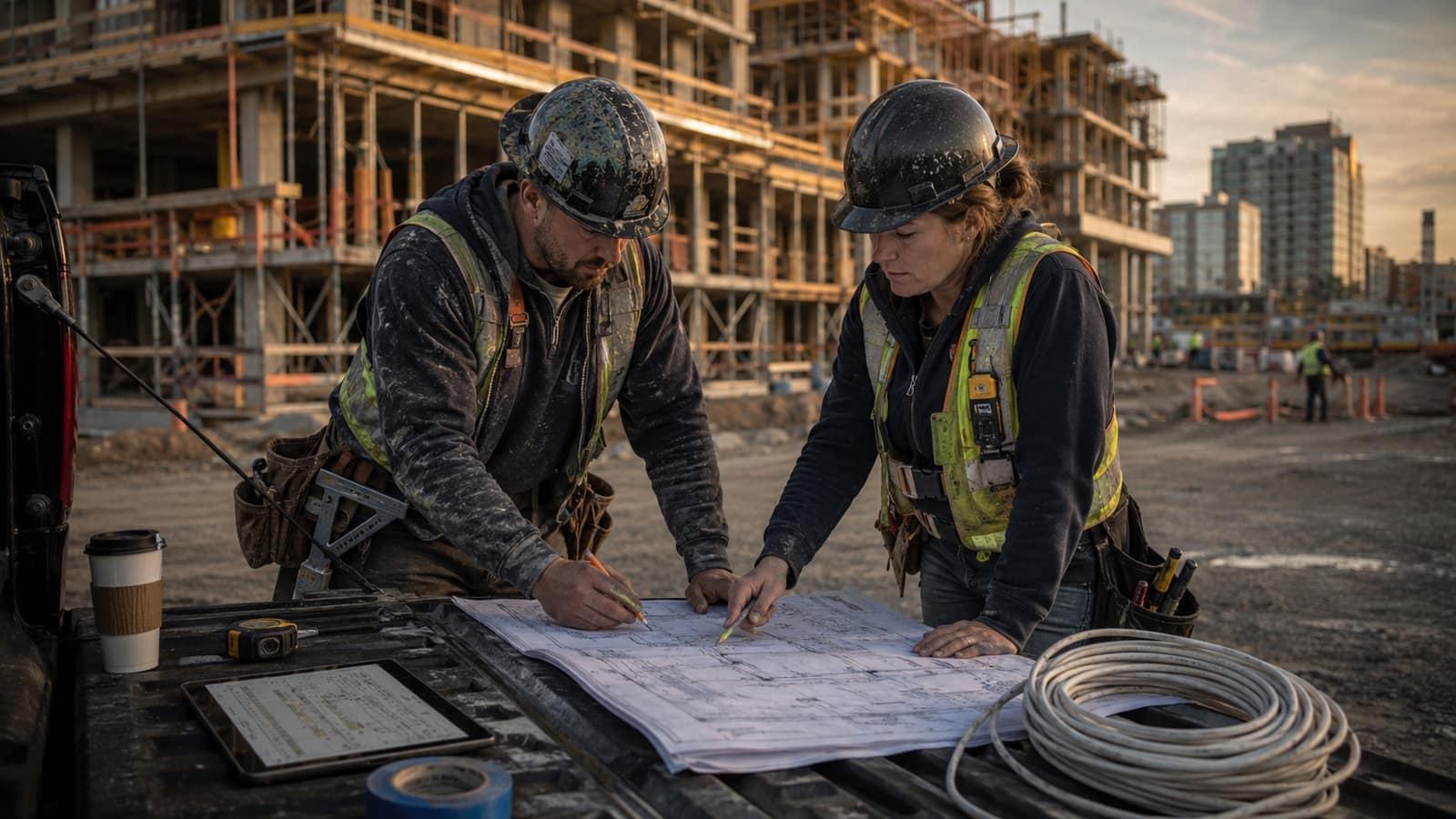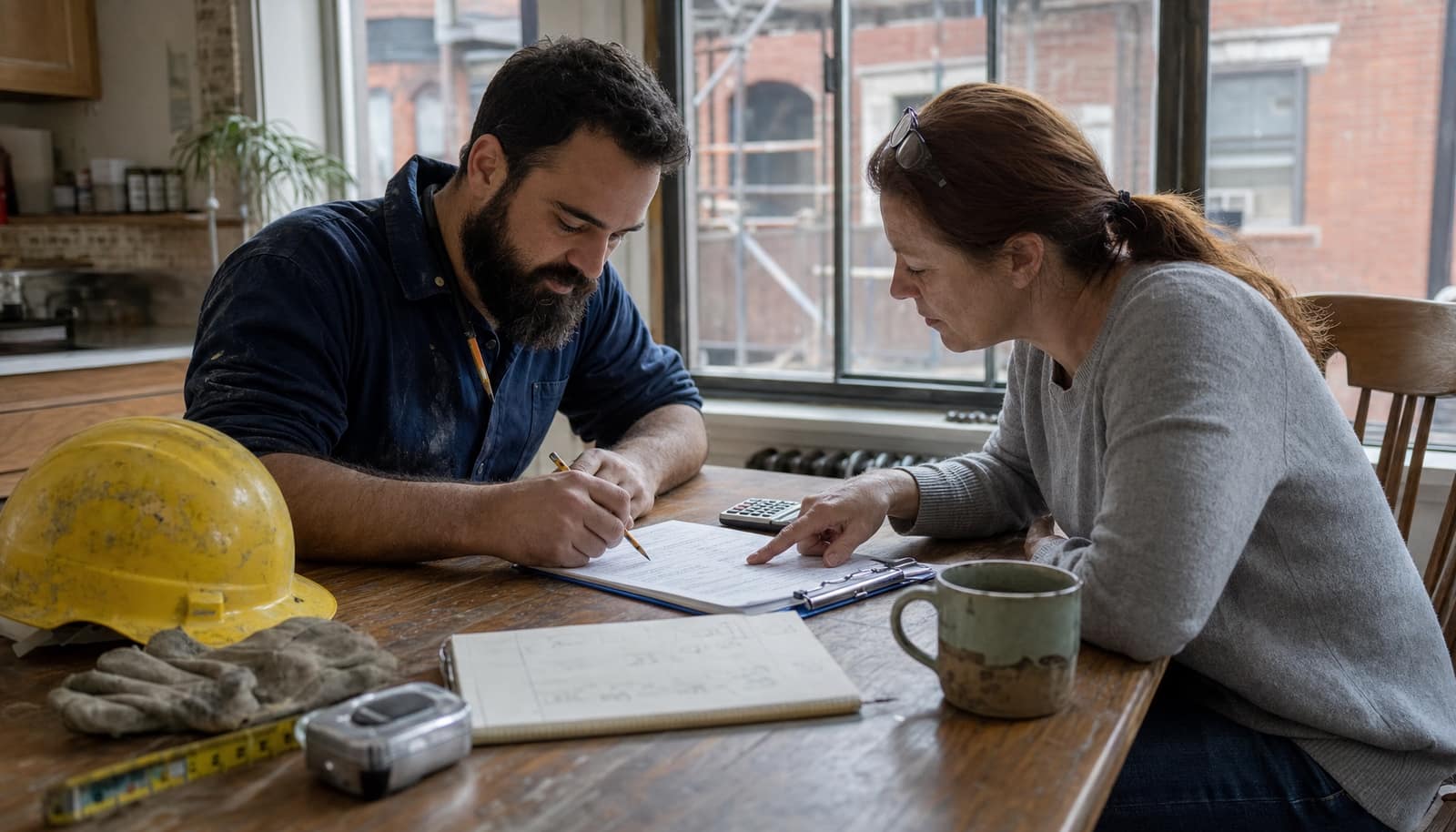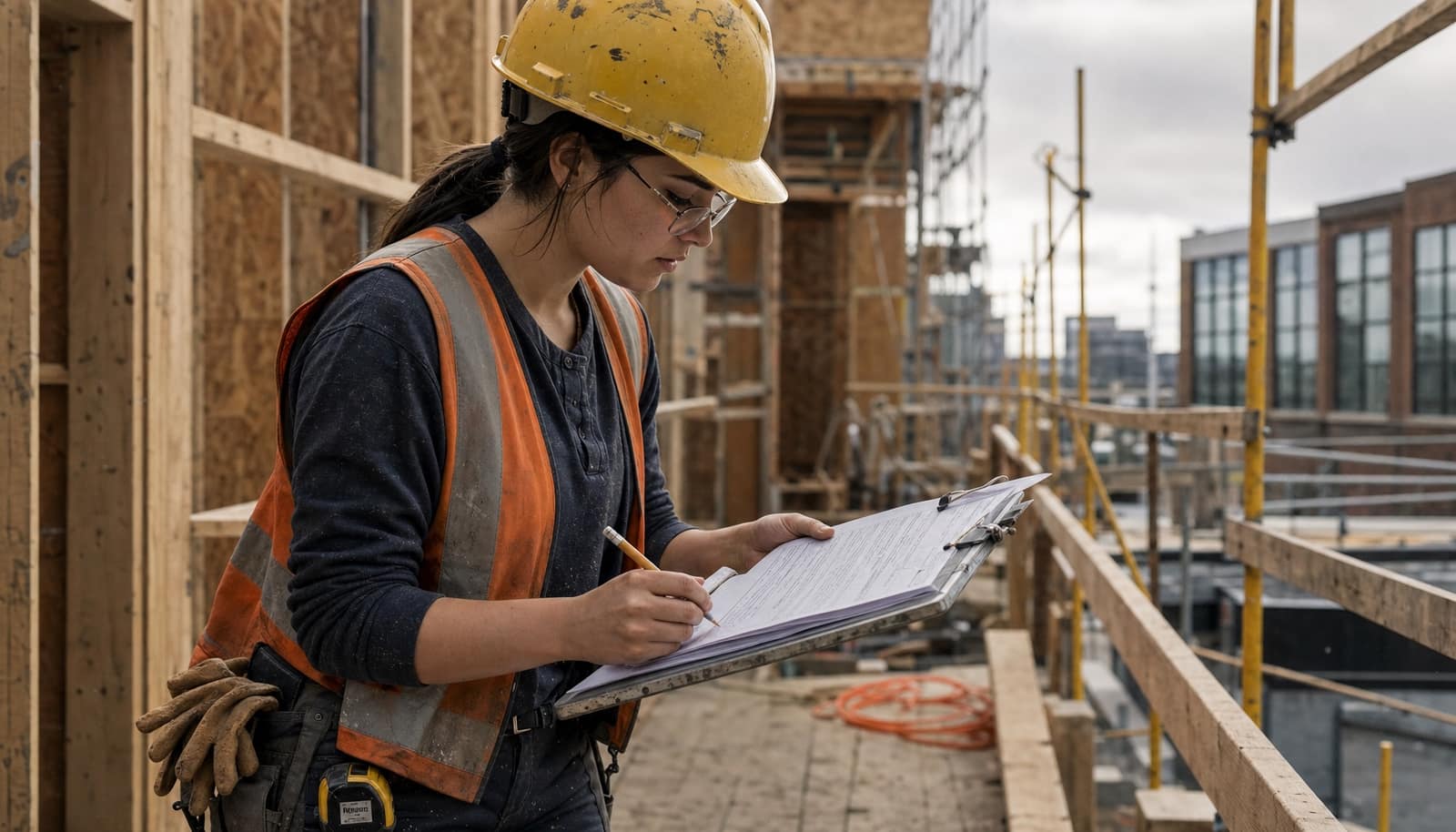
Technical skill is what gets a tradesperson hired. It’s not what gets them promoted.
The further along a career goes, the less it depends on the hands and the more it depends on everything around the hands: how a person communicates, how they read a budget, how they handle a customer who is not having a good day. Most apprentices don’t think about this in year one. They shouldn’t have to. But by year five or six, the people who keep climbing tend to share a set of habits that have very little to do with how well they can run conduit or hang drywall.
This is what we mean by professional skills. And in our experience, they are the single biggest predictor of where a trades career actually ends up.
Stepping off the tools
There comes a point in most trades careers where the work changes shape. The hands-on labour gives way, partly or fully, to oversight. A journeyperson becomes a foreman. A foreman becomes a superintendent. A superintendent ends up running their own shop.
The tools don’t disappear. The relationship to them does.
What replaces the daily swing of a hammer is leadership: delegation, scheduling, reading a crew, holding a tough conversation with someone you’ve worked beside for years. None of that is taught on a jobsite by accident. It has to be learned deliberately, and most tradespeople don’t get a heads-up that the shift is coming.
The people who keep climbing share a set of habits that have very little to do with how well they can run conduit.
A good supervisor on a trades crew is not the best technician in the room. They’re the person who can keep the best technician productive, safe, and not looking for another job. That’s a different skill set entirely.
How a trades company actually runs
Anyone aiming for a senior role eventually has to learn the operational machinery of the business. Logistics. Scheduling. Budgeting. Compliance. The software stack that ties it all together: ERP systems, project management platforms, the accounting tool that nobody loves but everyone depends on.
This is the part of the trades nobody puts on a recruitment poster. It’s also the part that determines whether a company stays in business.
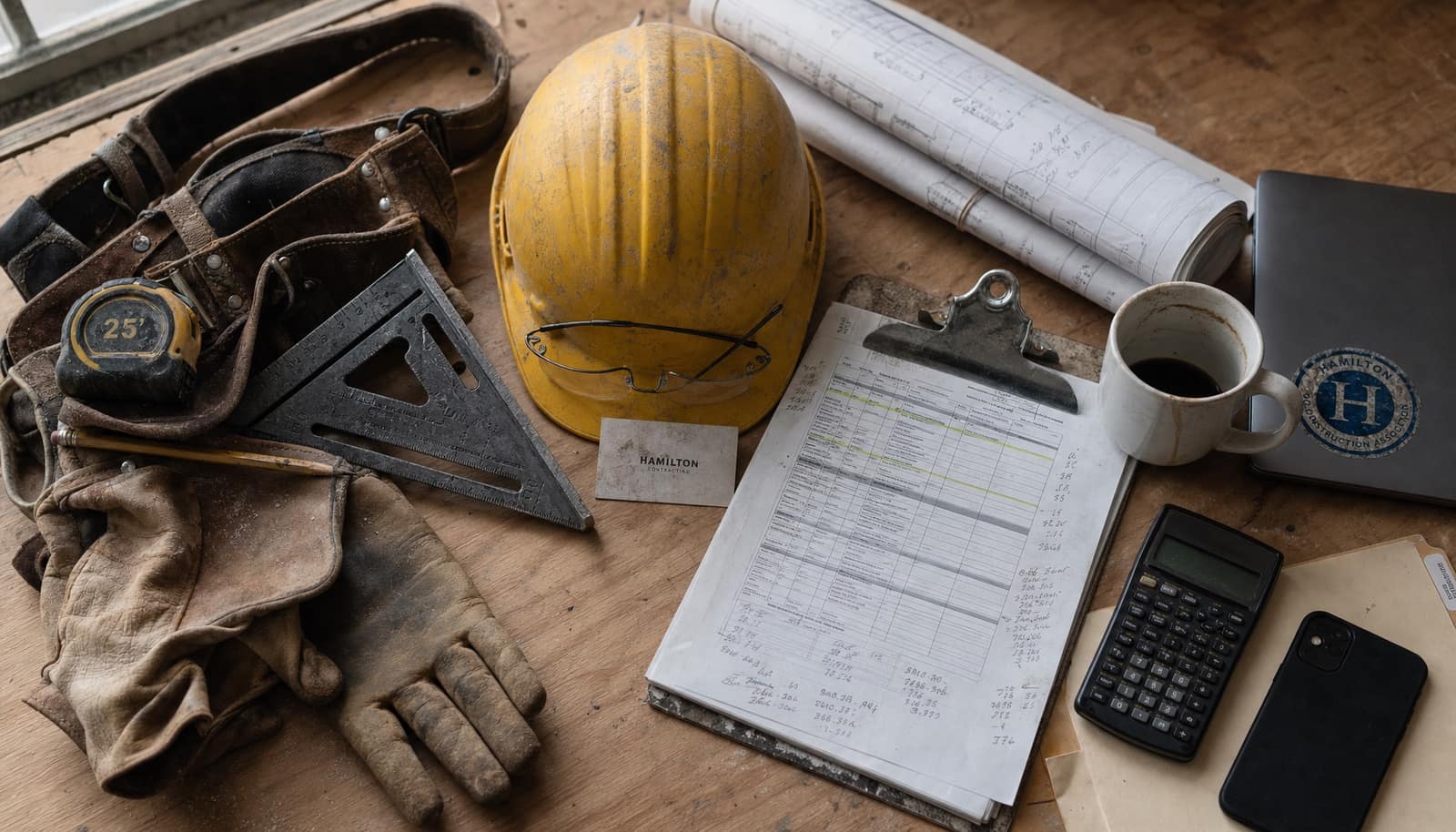
A tradesperson who understands how their company makes money (where the margin lives, where it leaks, how a delayed delivery cascades through three other jobs) has a different conversation with their boss than one who doesn’t. We’ve seen apprentices in their second year ask sharper questions about job costing than supervisors with twenty years on the tools. That kind of curiosity gets noticed.
Sales, client work, and running projects
Two career paths sit just outside the supervisor track and tend to get overlooked: sales and project management.
Sales in the trades isn’t the slick suit-and-tie version most people picture. It’s a journeyperson who walked a homeowner’s basement, listened, gave a straight answer, and built enough trust that the same homeowner called them again three years later for the kitchen. Repeat business and referrals are the lifeblood of most trades companies, and the people who can generate them are paid accordingly.
Project management is the other route. A good PM combines technical understanding with the ability to keep timelines, budgets, and a dozen subtrades pulling in the same direction. Certifications like PMP or Construction Management Certification give the work a formal structure, but the underlying skill is older than any acronym: the ability to see a project whole, anticipate where it will go sideways, and act before it does.
The baseline doesn’t change
Here’s the part that surprises people. The professional skills that matter for a foreman are the same ones that matter for a sales lead, an operations manager, or a partner running their own shop. The list is short and unglamorous.
Insistence on quality. Clear communication. Problem-solving when the plan falls apart. Adaptability when the next plan also falls apart. A willingness to keep learning after the apprenticeship is finished and the licence is on the wall.
The skills that get a journeyperson promoted are the same skills that, twenty years later, let them run the company.
We spend real classroom time on this at Trade Smart College. Not because professional skills are mysterious (they aren’t), but because they get treated as something you either have or you don’t. We disagree. Habits, mindset, sense of responsibility and control: all of it can be taught, practised, and strengthened. We get it wrong sometimes. But we believe the work is worth doing, and we believe it shows up in our graduates’ careers.
What this means for a career
If a tradesperson wants to spend forty years on the tools and retire happy, that’s a respectable life and we are not here to argue with it.
But if they want options (to step into supervision, run operations, sell work, manage projects, or own the shop someday), then the technical ticket is the start of the conversation, not the end of it. The professional skills are what carry the rest of the way.
That’s the part of the trades we want our students walking out the door understanding. The hammer is the beginning. What they build with it, in their career as much as on the job, is up to them.