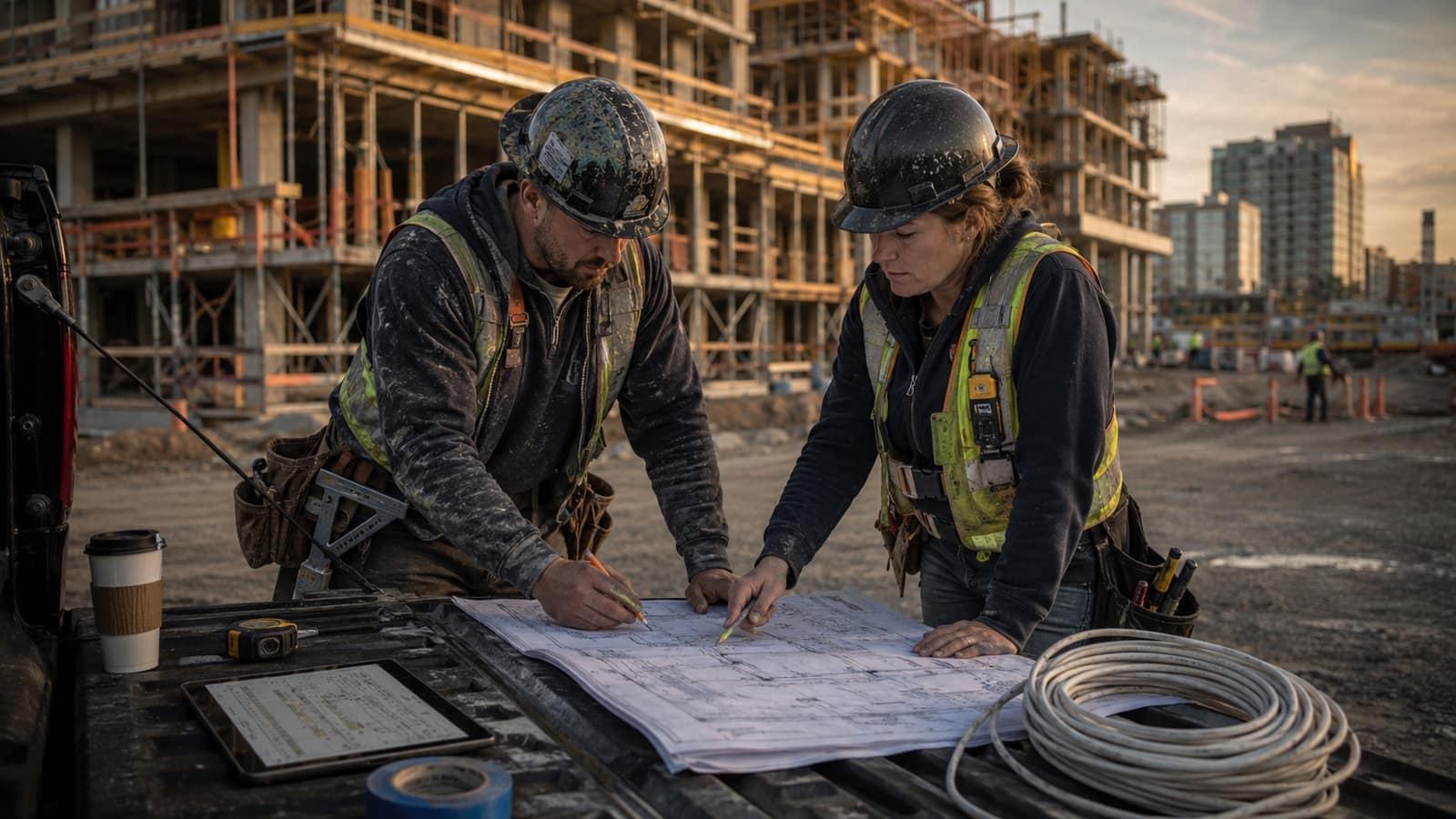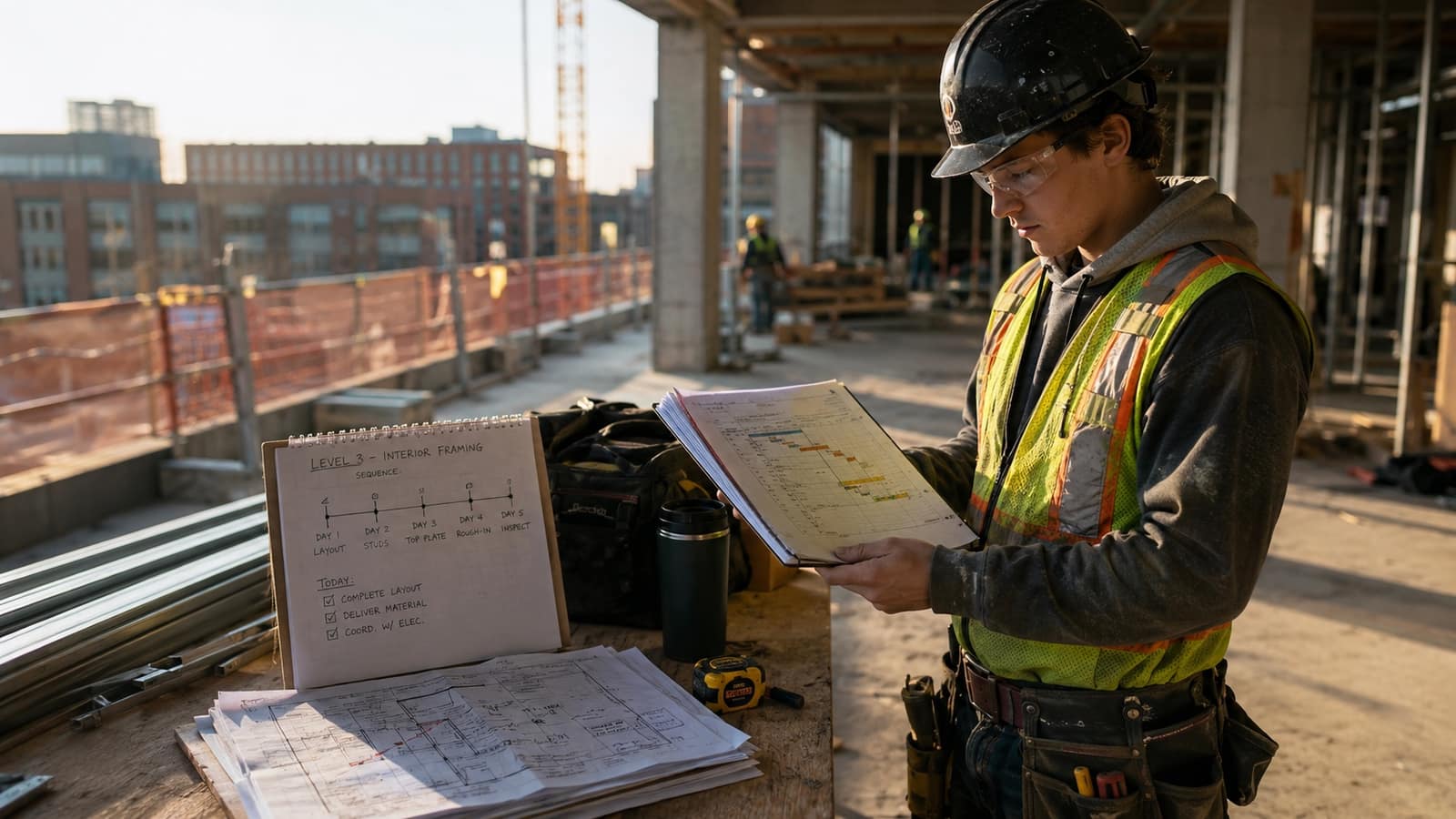
For too long, project planning has been treated like a reward, something handed to you after a decade of swinging hammers, once you’ve earned the clipboard. That logic sounds sensible. In practice, it leaves first-year hires playing catch-up on every site they walk onto.
The better question is the inverse. Why aren’t we teaching these skills to everyone before they step onto the job?
The case for teaching it early
Understanding how a project gets sequenced, how resources are allocated, how progress is tracked: that knowledge makes a worker more prepared, more reliable, more useful from week one. It’s not a management skill hiding inside a worker. It’s a worker skill we keep gatekeeping at the management level.
At Trade Smart College, we’ve built planning and tracking into the curriculum on purpose. Waiting until someone makes lead hand to teach them how a schedule actually works is backwards. The groundwork can be laid at the start, and when it is, students arrive on site as assets, not bodies filling an entry-level slot.
We keep gatekeeping a worker skill at the management level. Then we wonder why apprentices feel lost.
Seeing the whole picture
Picture a new hire who shows up willing to work hard. Now picture that same hire understanding how their day’s task fits into the project timeline: why the drywall has to be done by Thursday, what the electricians are waiting on, where their work sits in the critical path.
That second worker is a different animal. They adjust their pace without being told. They flag a problem on Monday instead of Friday. The crew spends less time managing delays and more time hitting the dates the client was promised.
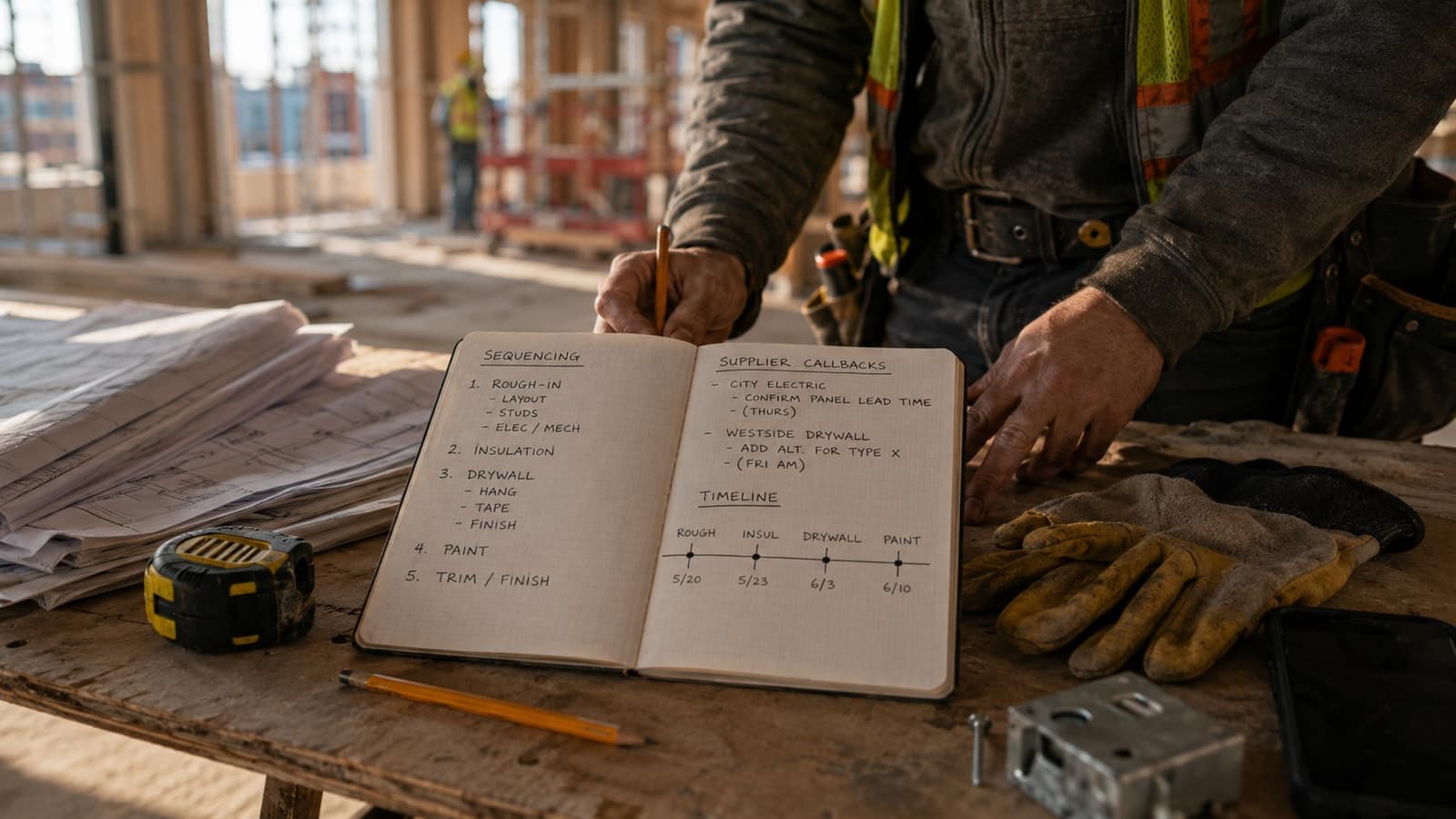
The other thing that happens, quieter but real: the apprentice sees their own contribution land. Confidence follows. So does retention.
Adaptability when the day goes sideways
Trade work has always been unpredictable, and the technology hasn’t fixed that. Materials show up late. Clients change the spec on Tuesday. The weather doesn’t read the schedule.
A worker who understands resource tracking doesn’t panic when the day goes sideways. They reassess. They reshuffle. They keep the job moving while everyone else is waiting for direction. Foremen notice that. So do owners.
The gap between apprentice and foreman
The traditional gap between a first-year and a foreman is mostly knowledge. The foreman tracks labour, anticipates pinch points, reads the schedule against the supply chain. The apprentice gets handed a task list and told to keep their head down.
That dependency slows the job. It also stalls the apprentice’s growth. When workers learn planning early, the gap narrows from both sides. They start anticipating instead of waiting. They ask better questions on the morning huddle. They step into lead-hand work without the awkward six-month stumble most crews accept as normal.
The apprentice who reads the schedule is the apprentice who becomes the foreman. Every time.
Career longevity in a moving industry
The trades aren’t static. Tools change, codes change, the way drawings come down to the field changes. What doesn’t change is the value of a worker who can read a project, anticipate a shortage, and offer a fix instead of a shrug.
That’s what planning literacy buys: not a promotion ladder, but durability. The kind of career that survives the next downturn and the next tool rollout.
What we’re actually doing
Teaching planning early isn’t about producing better workers in the abstract. It’s about producing crews that move faster because every member of the crew can see the field.
Our graduates leave knowing how a job gets staged. They leave understanding why the foreman is looking at next Wednesday on a Monday morning. That makes them hireable. More than that, it makes them hard to replace.
It’s time we stopped reserving these skills for the people with the trucks. Start teaching them to the workforce that’s actually going to build the next decade.