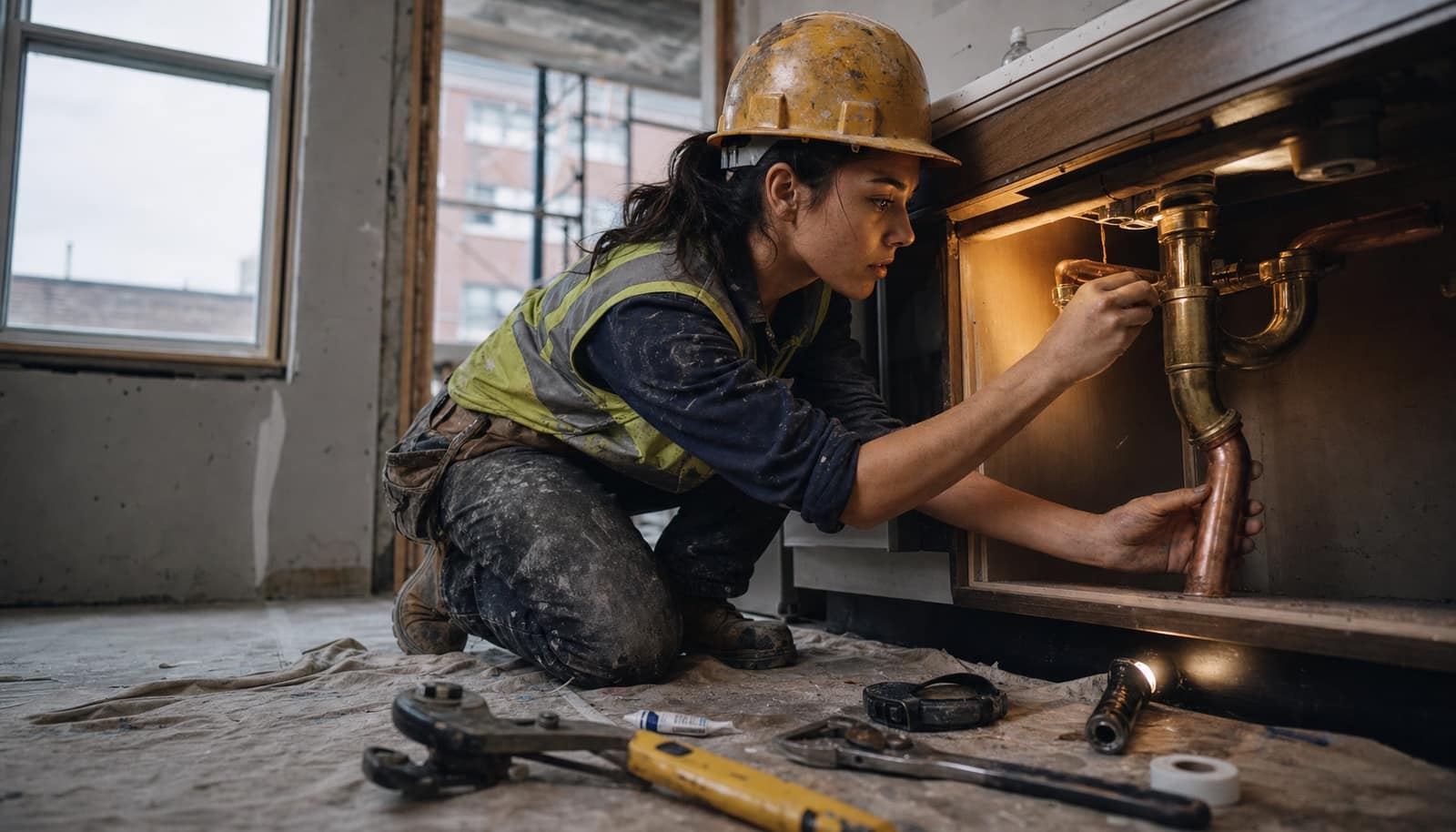
The way a tradesperson decides what to do next, and how to do it, shapes the work more than the tools in their belt. Technical skill matters. Physical aptitude matters. But underneath both is a mental approach that either compounds over a career or quietly limits it.
Decisions on a job site happen fast, often under pressure, often with incomplete information. The mindset behind those decisions is what separates the apprentice who gets called back from the one who doesn’t.
Four things matter most: a growth mindset, a bias toward quality, real pre-planning, and the ability to concentrate on the task in front of you.
A growth mindset on the job site
Carol Dweck’s research on the growth mindset is simple at its core. People who believe their abilities can improve through effort tend to improve. People who believe their abilities are fixed tend to plateau. In the trades, this isn’t a soft idea. It’s the difference between a 40-year career and a 5-year one.
Most students pick a trade with a thin understanding of what the trade actually involves. Plumbers do more than install toilets. Electricians do more than swap outlets. We’ve watched apprentices get visibly annoyed when a foreman says “go help Pat for an hour,” because Pat is doing something that doesn’t fit their idea of their trade.
Those apprentices get passed over. Quietly, consistently, and for years.
The apprentice who says “sure, what do you need” is the one who gets the call next Monday.
The trades are changing fast. New materials, new code, new tools, new software. A growth mindset isn’t a personality trait. It’s the operating system that lets a worker stay employable for thirty years.
A bias toward quality
Quality of work is a direct read on a worker’s skill, commitment, and professionalism. Having a bias toward quality means making decisions with the assumption that the job gets done right the first time, even when right takes longer, costs more, or requires going back to the truck for the correct fitting.
For an apprentice, this bias builds the reputation. Reliable workers who do good work are hard to replace. They get the calls. They get the raises. They get the lead-hand spot when it opens.

Quality also shapes the small decisions on site. Re-checking a measurement before the cut. Confirming the spec before the order goes in. Walking the run one more time before energizing.
Yes, quality sometimes runs into the wall of time and budget. We get that. But the workers who lean toward doing it right are the ones whose work outlasts the project, and whose name gets passed along when the next job comes up.
Pre-planning before the tools come out
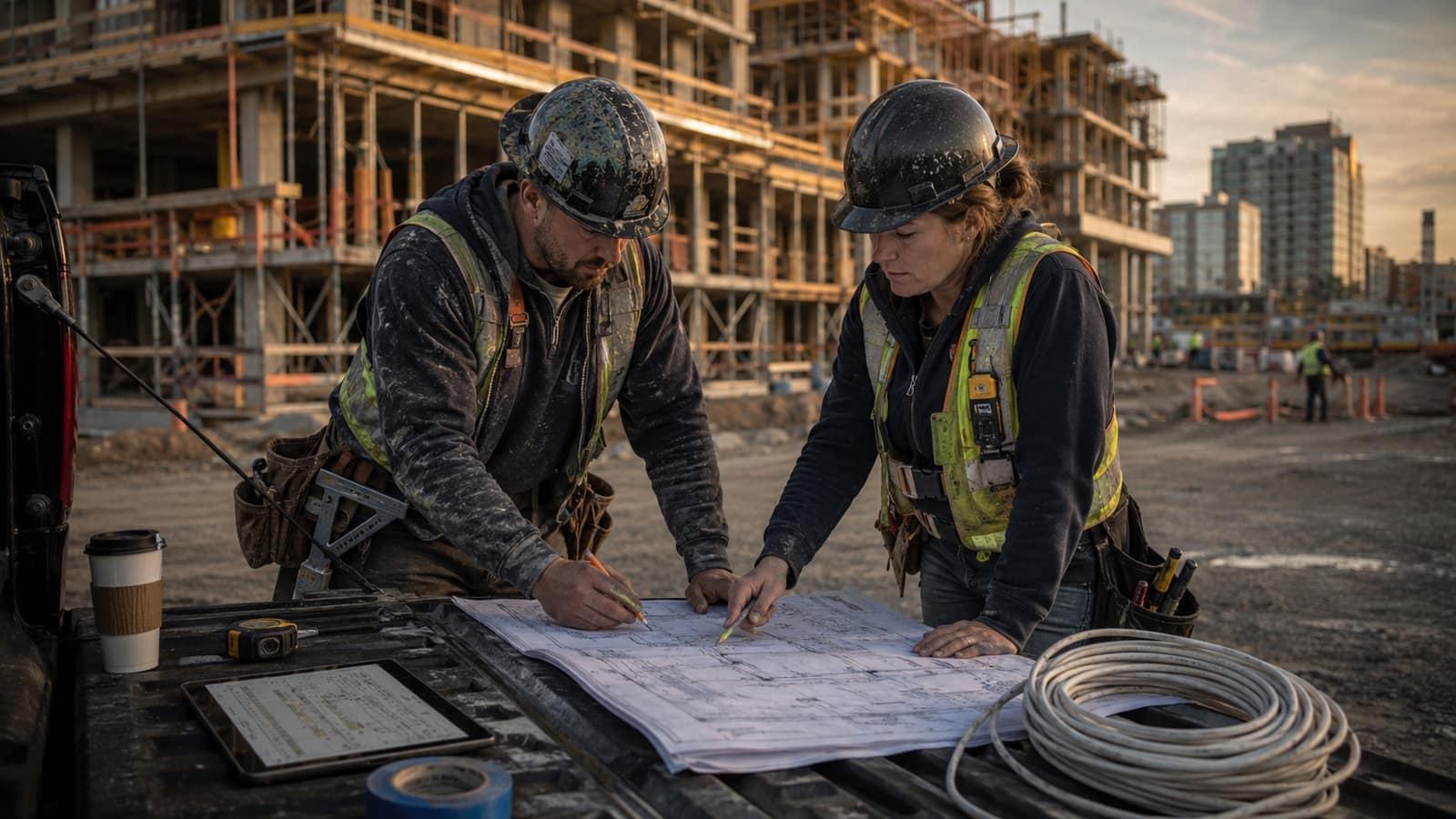
Decision-making in the trades doesn’t start when you pick up the drill. It starts on the tailgate.
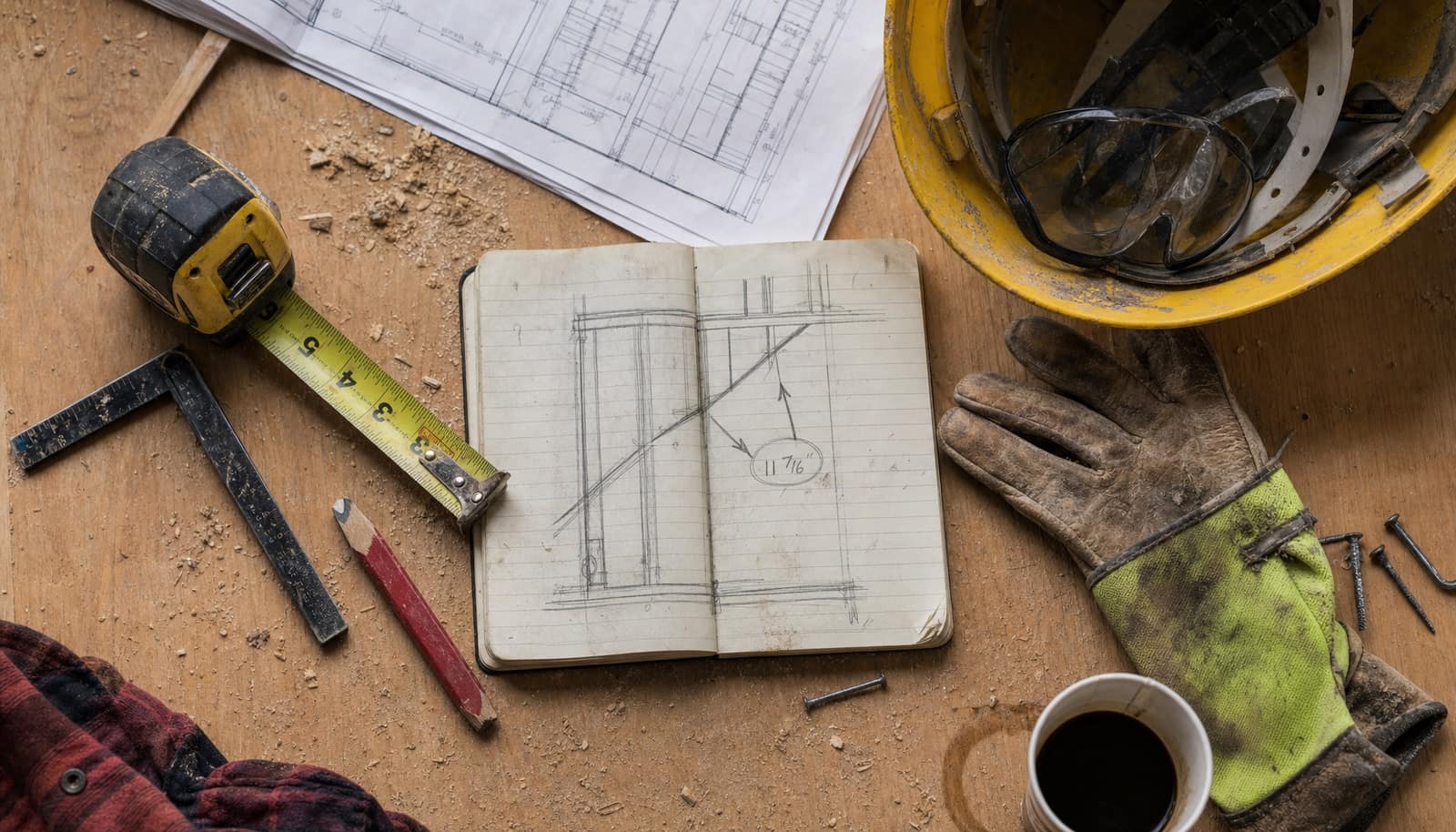
Pre-planning means thinking through the project before execution. What tools. What materials. What order. Where the obstacles are. What happens if the duct in the ceiling isn’t where the drawing says it is. A few minutes of this saves hours of rework.
It also makes a tradesperson better at adapting when something goes sideways, and something always goes sideways. A clear plan gives you something to pivot from. Without a plan, every surprise is a crisis.
For anyone running a crew, pre-planning is also a communication tool. Clear expectations up front means fewer questions in the middle of the work, fewer mistakes at the end of the day, and a safer site overall.
Task concentration under pressure
A job site is loud. Other trades are working around you, the foreman is asking questions, the radio is on, somebody’s grinder is screaming twenty feet away. Task concentration is the ability to stay locked on the work in front of you anyway.
This is harder now than it used to be. Earbuds in. Phone out every five minutes. Half-attention to a podcast while running pipe.
On most job sites, both are bad looks. Music and video aren’t part of the work. Beyond the bad impression, they’re a real safety problem, and most foremen won’t tolerate them. Distracted workers do worse work, slower. Nobody is paying anyone to take more time to produce something inferior.
How you do one thing is how you do everything.
Concentration is also a habit. The workers who can hold attention through a four-hour task built that capacity by practicing it on the small ones. It doesn’t show up the day you need it.
How these four things compound
The growth mindset keeps the skills sharp as the industry shifts. The quality bias builds the reputation that gets you hired and rehired. Pre-planning makes the work efficient and the surprises survivable. Task concentration makes sure the work that comes out of your hands is actually good.
Each one helps. Together they compound.
At Trade Smart College, these aren’t side modules. They’re built into the curriculum. We push our students toward a methodical approach because it applies to every task, from sweeping a shop floor to terminating a panel. How you do one thing is how you do everything. The student who treats the menial task with diligence is the student who can be trusted with the complex one.
Decision-making in the trades isn’t about picking the fastest or most convenient option. It’s about creating value, getting better at the craft, and building a reputation people remember. That’s how you get a job. And it’s how you keep one.