
BUILD YOUR TEAMS WITH A TRUSTED PARTNER.
Bring on team members who start with two months of intensive training: 310 hours in the technical and professional foundations of the trades.
- The technical foundation
- The work itself. Trades math, measurement and precision, hand and power tools, safety certifications and hazard awareness. Individual and team builds, from framing and rough-ins to finishing and site readiness.
- The professional foundation
- How to conduct oneself at work. Working at pace, owning outcomes, improving teams, and customer readiness. Trained every day, scored every week, and visible to every employer.
- November 13, 2026 Next
- January 11, 2027 Next
- March 15, 2027 Next
- May 14, 2027 Next
- July 13, 2027 Next
- September 13, 2027 Next

PREPARED. FOCUSED. RELIABLE.
We’ve asked hundreds of trades companies the same thing: what do you need from an entry-level employee?
The answer is almost always the same, and consists of three specific behaviours and three specific attitudes. The required behaviours are early every day, off the phone, and working hard. For the attitudes, companies need people who want to be there, take correction, and understand what the work is for so they can still be on the team in year three.
We designed our curriculum to teach all of these characteristics. And we train our students in them for 310 hours before you even see them. Every student is at least 18, with a high school diploma or equivalent.
The program was designed by Bruce Arai, PhD, a founder of the college and former university dean who still teaches leadership at an Ontario university. He has condensed his internationally recognized curriculum down to three traits and eight underlying competencies. Every student must demonstrate all eight before an employer ever sees them.

EIGHT THINGS EARN MORE RESPONSIBILITY.
Six are professional. Two are technical. We train and score both, because a student who is strong on one and weak on others is not ready for a crew.
PREPARED.
Trained on fundamentals on a real trades schedule, 7:15AM to 4:05PM every weekday.
- 1 Safety and Hazard Awareness TECHNICAL
- 2 Tool and Measurement Competence TECHNICAL
FOCUSED.
Trained to own outcomes, work at pace and keep the phone away.
- 3 Sense of Urgency PROFESSIONAL
- 4 Sense of Ownership PROFESSIONAL
RELIABLE.
Trained to show up on time, every day. Taught to communicate properly, have a great attitude, and work well on teams.
- 5 Punctuality, Attendance, Organization PROFESSIONAL
- 6 Professional Communication PROFESSIONAL
- 7 Exemplary Attitude PROFESSIONAL
- 8 Teamwork PROFESSIONAL
All eight can be learned. So we train them, and we score them every week.
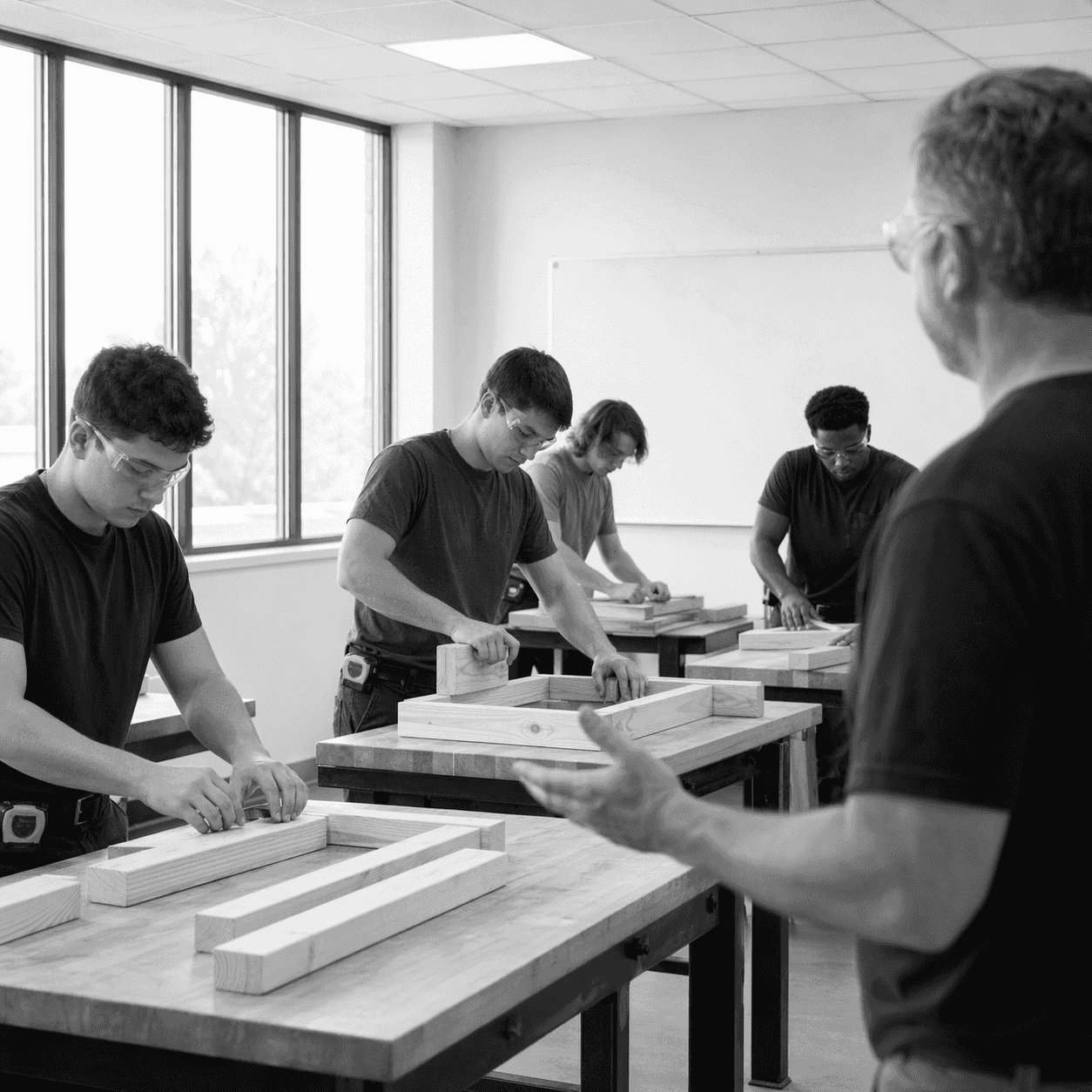
TWO MONTHS WITH US. SCORED EVERY WEEK.
The first two months with a new employee usually happen on your time. What if you could outsource those two months, and all the common mistakes, to someone else? At Trade Smart College, we can do that. We’ll teach your future employees from 7:15 to 4:05, Monday to Friday, and score them every week on all eight competencies. Then we’ll show you the scores and you decide who has earned your trust.
TECHNICAL PROFICIENCY
The technical side runs in sequence. Each week is the foundation for the next, and confidence builds with the skills, because each step is earned.
TECHNICAL
-
W1. Trades math and measurement
Tape work to the sixteenth, squares, levels and chalk lines, take-offs and cut lists, across lumber, drywall, foam, PVC and metal. A trades math drill runs in every lab for all eight weeks.
-
W2. Hand tools
Hammers and fasteners, hand saws, knives, snips and hacksaws, adhesives and tapes, used across different materials.
-
W3. Power tools
Circular, mitre and table saws, reciprocating saws, drills and impact drivers, grinders, compressors and air nailers. Guards, kickback and set-up come first, then repeat cuts and fastening patterns.
-
W4. An individual build exercise
Working alone from a drawing, to a standard, before working on a crew. One drawing and one tolerance sheet. Each student completes a build and submits it with the correct paperwork.
-
W5 to W7. A team build exercise, from framing through rough-ins to finishing
One wall, built in crews with rotating roles. Students learn how to work together and how one trade hands off a project to the next team.
-
W8. Site readiness
Setting up and closing down a site, outside and inside: layout, staging, safety controls, waste, floor protection, dust containment and working in occupied spaces. Understanding of the way a real jobsite runs.
PROFESSIONAL SKILLS
These run side by side with the technical work for all eight weeks, and all of it is practice, not customer work.
PROFESSIONAL
-
Self-leadership.
Leading and following, habits, mindsets and better decisions. The professional skills that make a crew trust someone new.
-
Building Empathy.
Students create a trades business on paper in order to understand everything it takes to run a small trades business. These insights make students better followers.
-
Customers and Sales.
Students plan, price and present a full customer bid to understand the work involved, and how a jobsite depends on sales.
How scoring works in class. A worked example.
The weekly scorecard,
at a glance.
Professional 6 of 8
The behaviours that make a company trust someone before they ever pick up a tool: how they show up, own their work, communicate, and carry a crew.
- PUNCT Punctuality, attendance, organization 9/10
- URG Sense of urgency 8/10
- OWN Sense of ownership Correcting 6/10
- ATT Exemplary attitude 9/10
- COMM Professional communication Correcting 6/10
- TEAM Teamwork 8/10
Technical 2 of 8
The hands-on fundamentals every trade expects from day one: working safely, and measuring, marking, and cutting with precision.
- SAFETY Safety & hazard awareness 9/10
- TOOL Tool & measurement competence 7/10

EVERYONE STARTS AT 1.
In week one, everyone scores a 1 or 2 in every category. Students must earn their increases, just like on a jobsite. And their scores can go down if they make mistakes or don’t maintain standards.
THE WRITTEN STANDARD. WHAT EACH SCORE MEANS.
- 10
- Exemplary; mentor ready; teaches peers with humility; rare.
- 9
- Very strong; consistently dependable and placement ready.
- 8
- Strong and independent; low supervision needed.
- 7
- Solid and repeatable; performs without chasing in most situations.
- 6
- Meets minimum standard with guidance; generally reliable but coachable.
- 5
- Approaching minimum standard; uneven performance.
- 4
- Below standard but improving; still needs regular support.
- 3
- Inconsistent; can do it sometimes but breaks under pressure.
- 2
- Severely below standard; frequent reminders and redirection.
- 1
- Not demonstrated; requires direct prompting; unsafe/unclear.
Eight weeks won’t give you a finished tradesperson, or a third-year apprentice. But students can learn work habits, attitude, safety, and teamwork. Not every student passes, and you won’t see the ones who don’t.
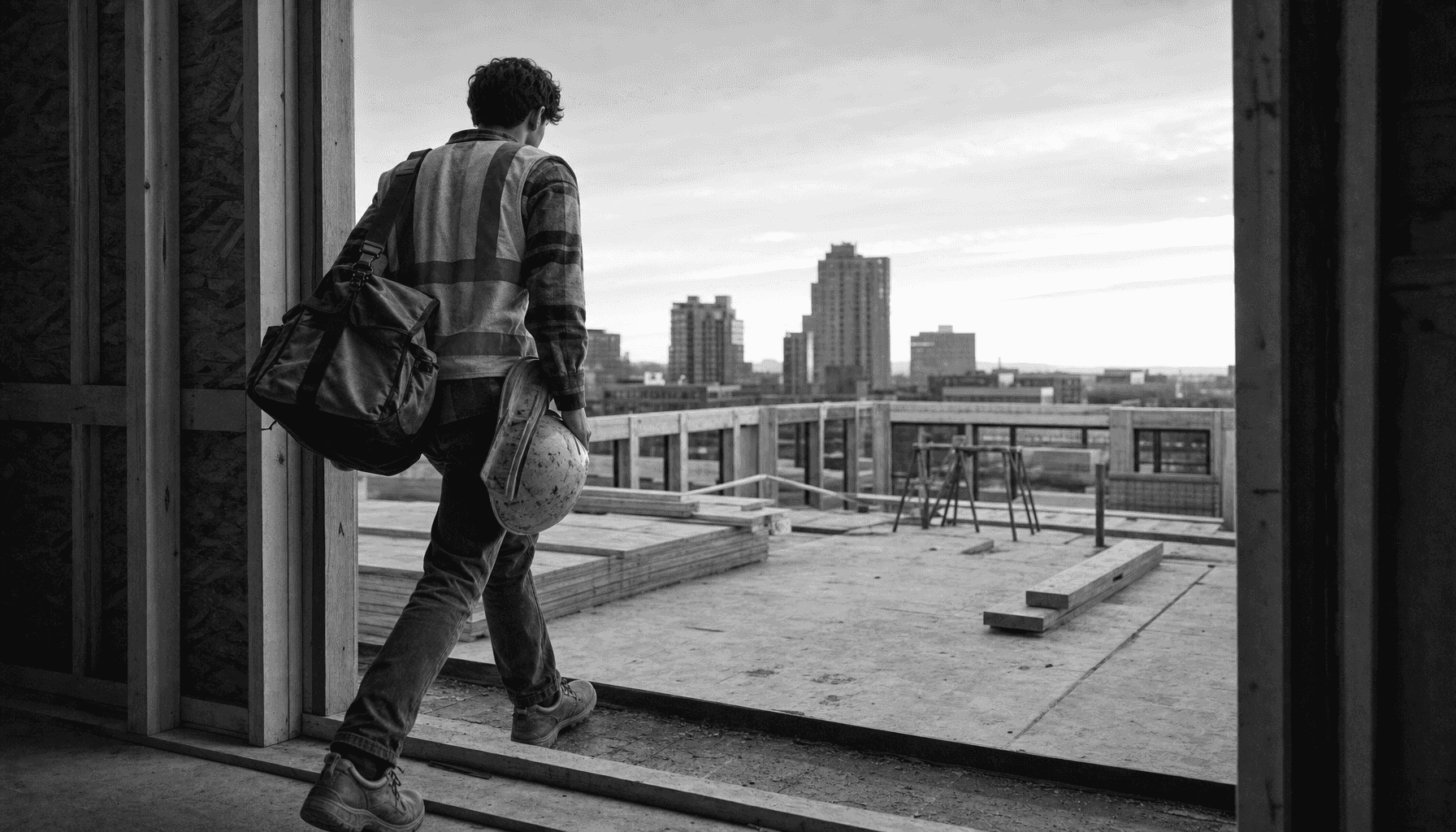
SIX MONTHS TO LEARN YOUR WAYS
If you’ve been burned by co-ops and work placements in the past, you have every right to be skeptical. Will you have to change your standards for the student or the college? Is this co-op placement going to benefit your company, or is the student just expanding their horizons? When you take a student from Trade Smart College, it is your standards for the whole internship, not ours. And every student we place knows they have six months to earn your trust and become a useful member of your team.
WHAT’S ON YOU. WHAT’S ON THEM. WHAT’S ON US.
- You
- Your crew, your way.
- Them
- Your team member. Our student.
- Us
- Beside you both, as much or as little as you need.
The match
- You
- Tell us about your work. Then interview the students we put forward and choose who joins you.
- Them
- Pass eight weeks in class. Then earn a spot at an interview, like anyone else you bring on.
- Us
- Pre-vetting. Eight weeks of scores on eight competencies. Not every student passes.
On your crew
- You
- Your work and someone to learn from. A supervisor to ensure things are done your way.
- Them
- Follow your rules. Students trained in punctuality, attitude, safety, and customer outcomes.
- Us
- Train them first. 310 hours of training. We do not lower our standards.
Pay and hours
- You
- Put them on payroll, with WSIB coverage. Minimum wage is the floor. Anything above that is your call.
- Them
- Work to the schedule you set. You set the work days and times, and they follow the schedule.
- Us
- Hands off. The student is your employee. We are not involved with schedules and compensation.
The paperwork
- You
- Seven pages over six months. Sign an internship agreement and a short evaluation once a month.
- Them
- Bring you the evaluation forms. Getting them signed is on the student, not on you to chase.
- Us
- Keep the records. We monitor progress and receive your sign-off on the completion of 950 hours so they can graduate.
If it goes wrong
- You
- Call us early. If something isn’t working, contact us right away and we will try to solve it with you.
- Them
- Meet the level you require. The internship can end if they don’t meet your standard.
- Us
- Talk to both sides. We work it through with you and the student, as far as you want us to.
After 950 hours
- You
- Keep them on if things are going well. That’s the goal, but there’s no obligation to do so.
- Them
- Graduate with their diploma. The internship is done, and they can carry on with you.
- Us
- Take stock. You have a team member and we have a graduate. When you’re ready for another, we’ll try to find you a good candidate.
Why do we do it this way? For too long, colleges have focused on filling seats in classrooms without regard to the number of jobs available. In our model, we need to supply companies with good prospects or else they will stop taking our students. We have as much skin in the game as you do.
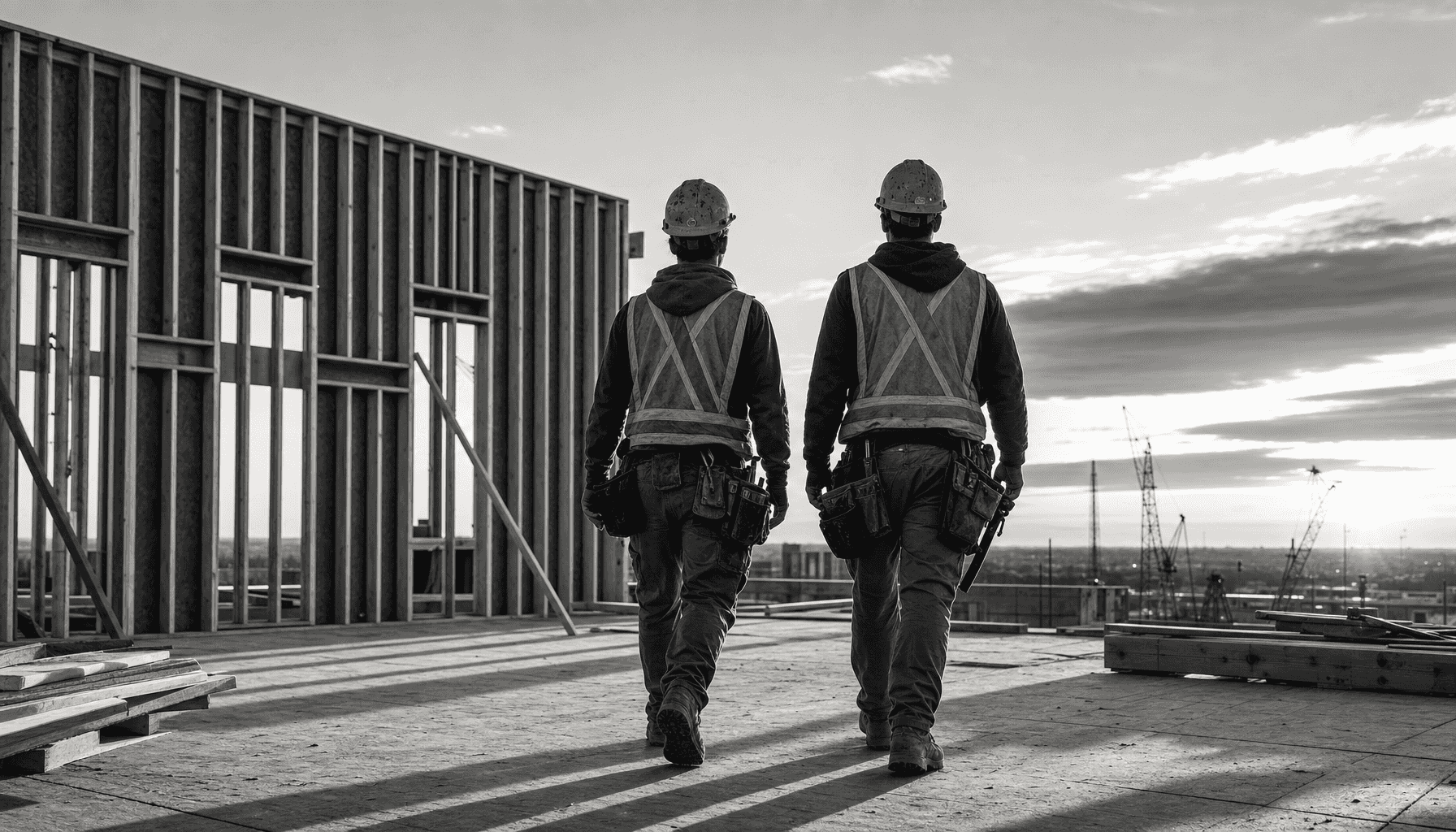
Two months with us. A career with you.
Two months of training with us gives students an opportunity to earn a job, and potentially a career, with your company.
TWO MONTHS WITH US
ON YOUR TEAM
GRADUATION
-
TWO MONTHS WITH US
TWO MONTHS IN CLASS.
Eight weeks full-time, in-person on a trades schedule, scored every week on eight competencies against a written standard. Not every student passes.
-
ON YOUR TEAM
WE VET. YOU CHOOSE.
We put forward students who’ve met our standard and could be a good candidate for your company. You interview and decide. That’s your choice.
-
FULL TIME ON YOUR TEAM.
Six months to earn your trust and become a valued member of your team.
-
GRADUATION
YOU DECIDE IF THEY GRADUATE.
Students must complete 950 hours of work in order to graduate. So they need to meet your standards, or else they don’t graduate.
Built for companies in the construction, manufacturing, transportation and related trades that want someone who grows with them.
Trade Smart College: Apprenticeship Pathways, Hamilton, Ontario. Registered as a career college under the Ontario Career Colleges Act, 2005.
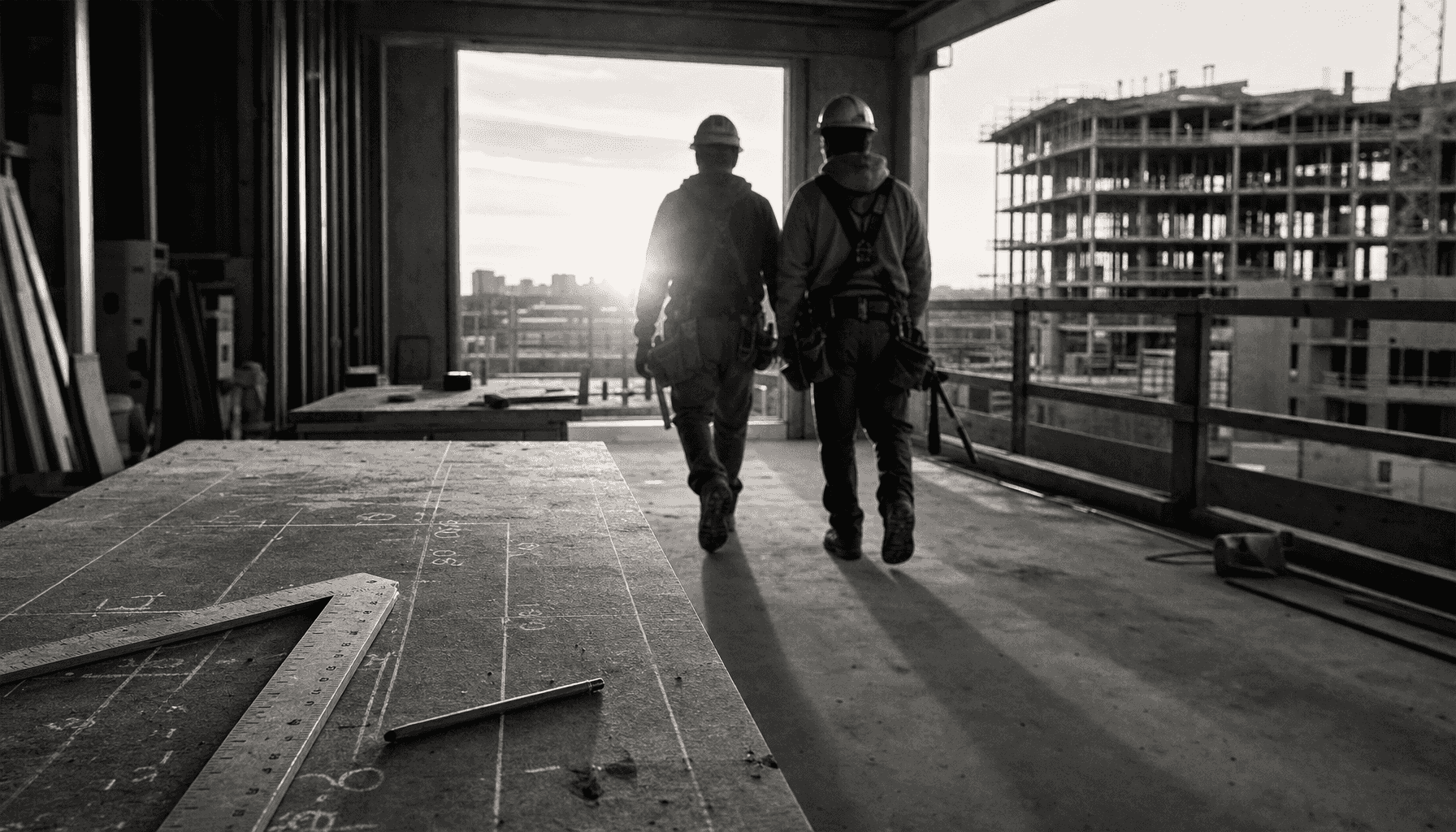
Next interns available from:
November 13.
Earlier starts are possible case by case.
Then
- Jan 11, 2027
- Mar 15, 2027
- May 14, 2027
- Jul 13, 2027
- Sep 13, 2027
- Nov 15, 2027
- Jan 2028
Built for
Companies with real work to teach and someone who will show them how it’s done.
Not built for
Short-term casual labour, where the plan is a few months and then cut loose.
30 MINUTES. THEN YOU’LL KNOW.
Someone trained and scored for eight weeks, and you choose who joins you. Call us. We’ll tell you plainly whether a Trade Smart intern fits, and when the next group is ready. If it fits, we send the internship agreement to read.
Nothing is signed on the call.
Come and see it first. Class runs Monday to Friday from 7:15 at 1275 Rymal Road East, Unit 2, Hamilton. Call and we’ll set a morning.
Have ready
- What your company does.
- What you’re bringing someone on for.
- Where the work happens.